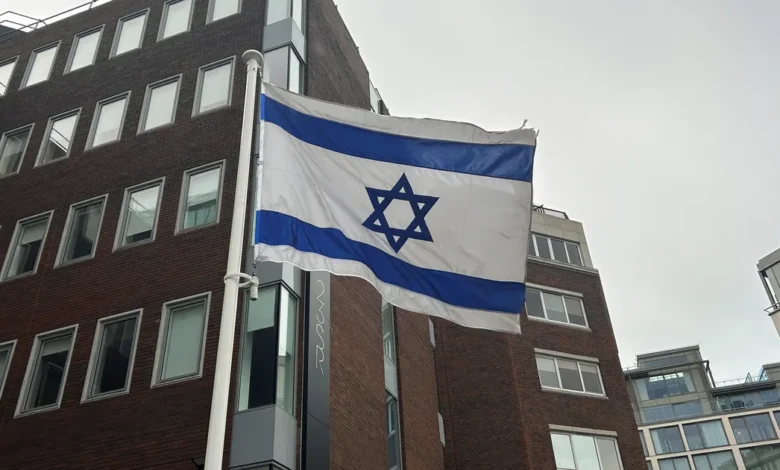
Events in Jerusalem have sparked a strong reaction in Spain and became a topic of discussion at the government level. The Spanish Ministry of Foreign Affairs summoned Israel’s chargé d’affaires due to actions by Israeli police, who prevented the Latin Patriarch of Jerusalem, Cardinal Pierbattista Pizzaballa, from entering the Church of the Holy Sepulchre to celebrate Palm Sunday Mass. For Spanish society, where Catholic traditions remain a significant aspect of cultural identity, incidents like this are seen as a challenge not only to religious sentiments but also to diplomatic relations between the countries.
Spanish Foreign Minister José Manuel Albares stated that Israel’s chargé d’affaires in Madrid was summoned to the ministry to clarify the situation and receive an official protest. According to the minister, Spain expects such restrictions will not be repeated and that Catholic ceremonies will proceed without obstacles. Observers note that actions of this kind may complicate dialogue between the states and spark discontent among the faithful.
Diplomatic consequences
The summons of the Israeli diplomat in Madrid was not just a formal step, but also a signal that Spain does not intend to overlook incidents involving restrictions on religious freedoms. In recent years, relations between Spain and Israel have experienced periodic tensions, though such incidents have rarely prompted such strong diplomatic actions. According to russpain.com, the situation around the Church of the Holy Sepulchre could mark a starting point for revisiting several bilateral agreements related to cultural and religious exchange.
Spanish media and public organizations are already calling for a more active defense of the rights of Catholic communities abroad. Some experts believe similar incidents could influence how Israel is perceived in Spanish society, where issues of religious freedom traditionally hold significant importance. At the same time, officials underline the need to maintain constructive dialogue and seek compromise solutions.
Reaction in Spain
Public reaction in Spain was quite sharp. Catholic organizations and members of the clergy expressed concern about the actions of the Israeli authorities and supported the position of the Ministry of Foreign Affairs. Social networks and leading news outlets are actively discussing the permissibility of such restrictions against religious leaders. Many note that the incident occurred on the eve of Easter, lending the situation additional symbolic significance for Catholics.
Given recent events in the region, Spanish authorities are increasingly faced with the need to respond to challenges related to protecting their citizens and religious representatives abroad. As russpain.com notes, Spain has previously taken measures to evacuate its citizens from conflict zones, demonstrating the country’s readiness to respond quickly to threats and incidents affecting national interests. For example, the operation to evacuate Spaniards from Iran was one such example of this policy.
Context and similar cases
In recent years, issues of access to religious sites and restrictions for members of different denominations have repeatedly become the subject of international disputes. In 2024, there have already been cases in Jerusalem where representatives of Christian churches faced difficulties in conducting religious ceremonies. Such incidents have raised concerns not only among believers but also at the level of European governments. In Spain, these events are felt particularly acutely, given the country’s historical ties to the Catholic Church and the importance of religious traditions for national identity.
Overall, diplomatic protests related to restrictions of access to holy sites are becoming increasingly frequent against the backdrop of rising tensions in the region. Spain, like other European countries, continues to closely monitor the situation and is ready to defend the interests of its citizens and religious communities on the international stage.