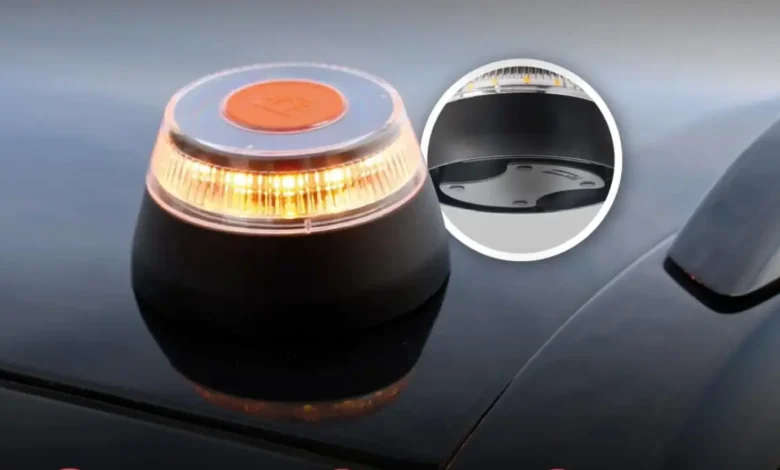
Starting January 1, 2026, all drivers in Spain will be required to have a special V16 emergency beacon in their car. This device will completely replace the traditional warning triangles, which will become illegal for all vehicles with Spanish plates. The new regulation has already sparked a wave of questions and concerns among drivers, as the market is now flooded with options that can be confusing even for experienced motorists.
While some drivers are still trying to figure out how to choose the right beacon, others have already encountered fraud. There are dozens of V16 models on sale that may look identical to the official ones but do not meet the new requirements. Some even come equipped with a SIM card and geolocation system, but lack the mandatory certification. Buying such a device could not only result in losing your money, but also facing a fine on the road.
What will change for drivers in 2026
Under the new rules, the only permitted way to signal an emergency stop will be to use a V16 beacon connected to the DGT 3.0 system. This means the device must be equipped with a built-in SIM card, be able to transmit the vehicle’s location data, and operate independently for at least 30 minutes. All these requirements are strictly regulated and are mandatory for all road users.
However, having all the technical specifications does not guarantee that the beacon complies with the law. The main requirement is official certification, which is issued by only two Spanish laboratories: LCOE (Laboratorio Central Oficial de Electrotecnia) and Applus IDIADA. Only devices bearing their mark are approved for road use in the country. All others, even if they look identical, are considered invalid.
How to tell a certified V16 beacon from a counterfeit
When purchasing an emergency beacon, pay close attention to the labeling. The packaging or the device itself must display a number starting with “LCOE” followed by a ten-digit combination with a letter and possibly an additional digit, for example: LCOE 2022110790G1. An alternative is a number with the “IDIADA PC” prefix and eight digits, like: IDIADA PC23060613. The absence of such marking is a clear sign that the beacon has not passed official inspection.
For complete assurance, compare the number with the current list of certified models on the DGT website. This list is regularly updated, and only devices included on it are considered legal. If the number is not found, use of such a beacon is prohibited, even if it fully meets technical requirements.
What are the risks of using a non-certified V16 beacon
If you stop on the shoulder without an approved V16 beacon, you face a fine of up to €80—the same penalty that previously applied for not having warning triangles. Additionally, if you exit your vehicle without a reflective vest, you can face an extra penalty: €200 and a loss of four points from your driver’s license. These measures aim to improve road safety, but they also create opportunities for fraud in the accessories market.
Many sellers take advantage of buyers’ lack of awareness, offering devices with attractive features but lacking proper certification. As a result, even a responsible driver risks breaking the law if they don’t check the lightbar before purchasing. It’s important to remember: the responsibility for choosing the right device lies with the vehicle owner.
What to look for when purchasing a V16 in 2025
Before purchasing an emergency beacon, carefully examine the packaging and technical specifications. Don’t trust only the seller’s words or an appealing price. Always check for an official LCOE or IDIADA PC number and make sure it appears on the DGT list. It’s also helpful to read reviews from other buyers and avoid suspicious online stores.
If you have doubts, it’s best to consult professionals or go to specialized stores that offer warranties on their products. Remember, cutting corners on safety can end up costing you much more in the long run.
If you didn’t know, the Dirección General de Tráfico (DGT) is Spain’s main government authority in charge of road safety and enforcing traffic regulations. The DGT develops and implements new standards for emergency devices and maintains the official register of certified V16 models. The organization regularly updates drivers about new measures and runs awareness campaigns nationwide.