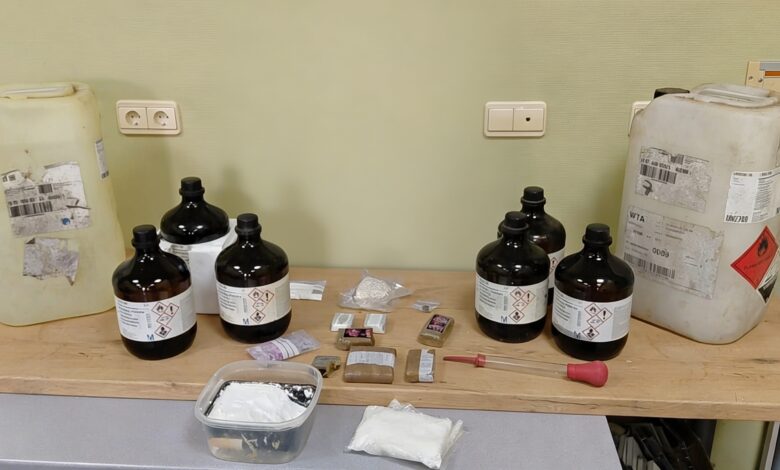
The strict sentence handed down in the case of possession of hazardous substances and a large quantity of drugs in Burgos has become a notable event across Spain. The court’s decision underscores tougher controls on the circulation of chemicals and narcotics, making it clear that such actions will not go unpunished. As illegal possession of explosives and drugs can threaten the safety of entire neighborhoods, this case has drawn widespread public attention.
According to El Pais, the investigation began after Civil Guard officers took notice of suspicious online purchases of chemical and pyrotechnic materials. Checks revealed that the man, who had previously worked in the pyrotechnics sector, did not have a valid license to handle such substances. Despite his expertise, the lack of authorization and safety measures were considered aggravating factors.
Investigation and arrest
At the beginning of 2024, law enforcement received information about possible illegal activities related to the manufacture and storage of pyrotechnics. Authorities were alerted by parcels arriving from Valencia and Poland containing components for chemical reactions, including iron and aluminum powders. According to TEDAX experts, these materials can be used to create thermite mixtures, which are utilized in industry as well as for arson or sabotage.
The man acted cautiously, regularly visiting a garage owned by his mother, where he transported unidentified cargo. On March 1, 2024, his car was stopped for inspection. In a hidden compartment under the rear seats, police found six kilograms of a substance packaged in vacuum bags. Initially, it was thought to be precursors for explosives, but analysis showed it was the drug speed.
Discovery of the storage site
A search warrant allowed police to search the suspect’s home. Inside, they found 25 kilograms of speed, worth nearly 400,000 euros on the black market. Dozens of types of chemicals, acids, acetone, precursors for explosives, 91 meters of fuse, gunpowder, and materials for homemade pyrotechnics were stored in the house and garage. Authorities also seized 1,697 pyrotechnic items and commercial fireworks, which experts believe had not been modified for criminal use.
Digital devices seized from the suspect contained photos of pyrotechnics, images from protests in the Gamonal district in 2014, and documents with recipes and tables for making fireworks. The defendant admitted to possessing the drugs, claiming they were for personal use, and said he tried to obtain a license to store chemicals.
Court decision and implications
The court sentenced the man to 11 years in prison: seven years for a drug-related offense and four years for possession of explosives. In addition to the prison term, he was fined 600,000 euros. The verdict noted that the lack of a license and safety measures posed a threat to others. According to El Pais, the defendant has already spent two years in pre-trial detention, which will be counted toward his total sentence. The court’s decision can be appealed to the higher court of Castilla y León.
In recent years, Spain has tightened control over the circulation of chemicals and precursors used in the production of explosives and drugs. Similar cases, where large quantities of dangerous substances were found in private homes, have repeatedly sparked public discussion. For example, in one of the recent investigations, authorities were alerted by the suspicious actions of an official, which also led to a large-scale inspection and arrest. Such cases highlight the importance of ongoing vigilance and oversight by law enforcement.
A surge of interest in the illegal trafficking of chemicals and drugs in Spain is linked to a rise in discovered underground laboratories and warehouses. In recent years, law enforcement has repeatedly seized large quantities of precursors and narcotics, highlighting an ongoing threat to public safety. Authorities are intensifying efforts to monitor suspicious purchases and shipments, and are tightening penalties for such crimes. This trend reflects the government’s determination to minimize risks to the public and prevent potential tragedies associated with the illegal storage of hazardous substances.