In the sun-drenched heart of Andalucía, among rocky mountains and fertile valleys, lies a place that can change our understanding of how civilization began on the Iberian Peninsula. Long before the Romans and Phoenicians, when European history was just beginning, this site was already home to an organized, fortified, and remarkably advanced society. This is Los Millares, a settlement rightfully considered the cradle of urban life not just in Andalucía, but in all of Spain.
What is Los Millares
Los Millares is not just a cluster of ancient dwellings, but the first full-fledged city of the Copper Age, founded between 3500 and 3100 BC. While most European tribes were still leading a semi-nomadic life, a sophisticated culture was already flourishing here. Its inhabitants not only built huts but erected powerful concentric walls, set up remote forts for defense, and practiced elaborate burial rituals in collective tombs. Its strategic location, which provided access to water, fertile land, and, most importantly, copper deposits, became the key to its prosperity.
This was a society with a clear social hierarchy, as evidenced by its monumental necropolis—one of the largest in Europe from that era. Advanced metallurgy, trade networks that reached the distant corners of the peninsula, and remarkable urban planning make Los Millares a unique monument of the prehistoric age.
A journey into the past
Today, the archaeological complex of Los Millares, located in the municipality of Santa Fe de Mondújar (Almería), offers visitors a unique opportunity to travel back 5,000 years. These are not just ruins, but a carefully recreated space that immerses you in the atmosphere of an ancient city. Here, you can see a grand necropolis with dozens of tholos tombs, explore several lines of defensive walls, and remnants of residential structures.
Of particular interest are the watchtowers scattered across the nearby hills, which once controlled access to the settlement. To fully immerse visitors in the era, the interpretation center features full-scale reconstructions of walls and huts, while a multimedia exhibit reveals the daily life, beliefs, and crafts of the people of Los Millares.
Life in the Shadow of History
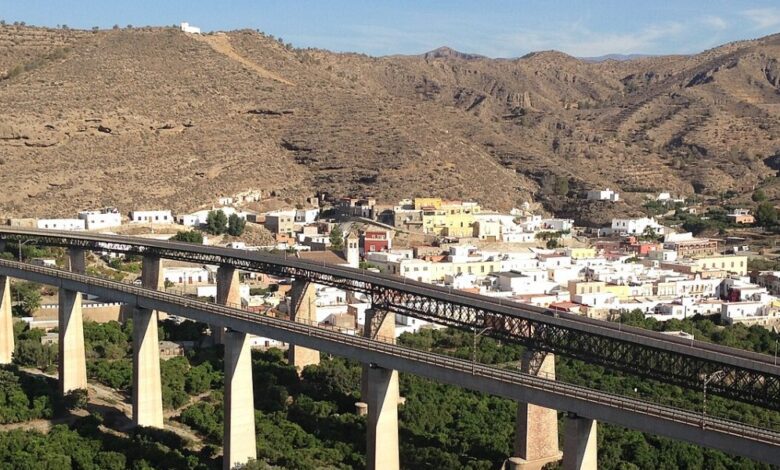
The modern guardian of this archaeological treasure, the town of Santa Fe de Mondújar, stands in striking contrast to its ancient predecessor. This quiet and welcoming Andalusian pueblo enjoys a relaxed pace of life amid the rural landscapes of the Andarax River valley and the characteristically arid terrain of Almería. Its streets have preserved their traditional charm, and locals take pride in their unique historical legacy. Living here means enjoying tranquility and nature, while feeling an unbreakable connection to the deep roots of this land.
Contenders for the Oldest Title
Spain is home to numerous ancient settlements, and Los Millares is not the only contender for historical primacy. Cádiz is often cited as the oldest city, founded by the Phoenicians in 1104 BC, and recognized as the oldest continuously inhabited city in Western Europe. One should also remember the legendary Tartessos in Huelva, considered among the first civilizations of the peninsula’s southwest, or Numancia in Soria, a symbolic Celtiberian enclave. The Atapuerca caves in Burgos, meanwhile, preserve traces of human presence dating back hundreds of thousands of years.
However, the key distinction of Los Millares lies in the fact that it represents the first known example of complex urban organization on Spanish territory. It was not merely a dwelling site or a trading post, but a fully developed proto-city with planned layout, defensive systems, and intricate social structures—emerging thousands of years before the arrival of the Phoenicians and Romans.
RUSSPAIN Reference: The Copper Age, or Chalcolithic (Eneolithic), on the Iberian Peninsula (circa 3500–1800 BC) marked a turning point. This period saw the first use of metals—primarily copper—for the production of tools, weapons, and ornaments. The adoption of metalworking led to significant social stratification, the rise of craft elites, and more complex social structures. The Los Millares culture stands as a striking example of these processes, demonstrating a remarkable level of organization and technological advancement for its era.