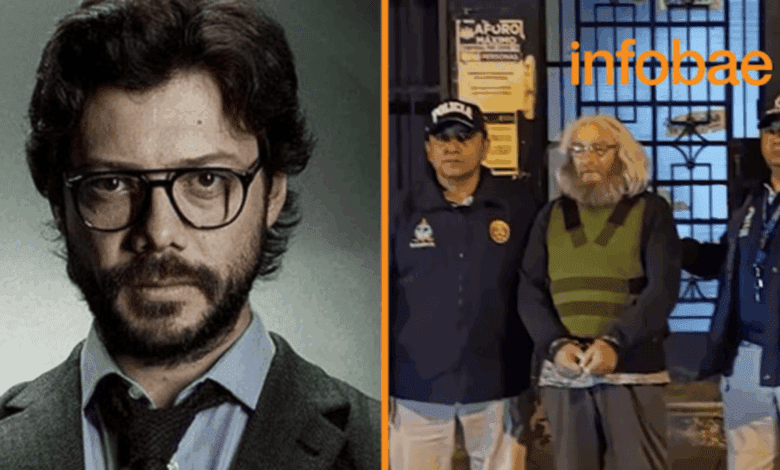
José Juan Martínez Gómez, better known as ‘Rubio,’ is back in the spotlight following his extradition to Peru. In 2024, decades after his notorious crimes in Spain, he was arrested and sent to Lima, where he faces charges of drug trafficking. Martínez Gómez is now 69 years old and has spent most of his life behind bars, yet his name still captures the public’s imagination even after all these years.
He was met in Peru under heavy security. Immediately upon arrival in the capital, he was transferred to a prison facility, where he will remain until the investigation concludes. Peruvian authorities claim he was behind an attempt to smuggle a large shipment of cocaine to Europe back in 2008. At that time, anti-narcotics officers at Lima airport discovered two suspicious suitcases containing three packets with more than ten kilograms of cocaine hidden among sweets and coffee. According to investigators, the bags were registered in Martínez Gómez’s name, and the final destination was Italy.
Charges and defense
Peru’s prosecutor’s office is convinced: Martínez Gómez personally came to Lima to organize the drug shipment abroad. As evidence, they cite not only the luggage documents but also testimony from a hotel employee who claims to have seen the Spaniard among the guests during that period. Investigators believe this evidence is sufficient to bring charges.
However, the defense maintains the opposite. The lawyers insist their client was in France at the time of the alleged crime, serving a sentence there. They question the authenticity of the passport details and claim that the suitcases could have been registered under Martínez Gómez’s name without his knowledge. Moreover, the defendant’s health is of concern: in April 2024, he suffered a heart attack and has since struggled with serious heart problems.
The rise and fall
Martínez Gómez’s name became known throughout Spain back in the early 1980s. In May 1981, he led a daring heist at the Central Bank in Barcelona, where a group of armed men took more than three hundred hostages. The criminals demanded the release of participants in a failed military coup that had taken place several months earlier. The story shook the nation and became one of the most high-profile crime chronicles of that era.
For this crime, Martínez Gómez was sentenced to 30 years in prison. During his years of incarceration, he made several escape attempts, but each time he was caught and brought back behind bars. His story inspired numerous publications, and years later became the basis for the hit series “La Casa de Papel” (“Money Heist”), where “Rubio” served as the prototype for the main character.
A new chapter
After being released from a Spanish prison, Martínez Gómez did not disappear from law enforcement’s radar. In 2009, an international arrest warrant was issued in his name on suspicion of drug trafficking. He remained in hiding for a long time, but in 2024 he was detained and extradited to Peru. Now he will have to prove his innocence again, but this time on another continent and facing new charges.
The story of “Rubio” is not only a chronicle of crimes, but also an example of how real life can become the basis for cult classics. His journey from leader of a daring gang to a figure in an international drug case continues to spark interest and debate both among fans of crime dramas and those following the progress of legal proceedings.