Tensions continue at the border in Ceuta: every day, dozens and sometimes hundreds of young people from Morocco try to swim across to Spanish territory. In recent weeks, such attempts have notably increased, putting additional pressure on the Civil Guard officers responsible for security and rescuing migrants at sea.
Border officials report working under staff shortages and a lack of specialized rescue boats. Many available vessels are not equipped for rapid evacuation from the water, and the number of personnel per shift often does not exceed five. As a result, some boats cannot even leave port due to the lack of the minimum crew required.
According to the Ministry of the Interior, from the start of January to mid-August this year, 1,725 migrants reached Ceuta by sea or by land—an increase of 7.2% compared to the same period last year. In just the past two weeks, 269 people crossed the border, and in July alone—474. Attempts are especially frequent at night or in foggy conditions when visibility is at its lowest.
The main routes pass through Castillejos beach in the Moroccan city of Fnideq, located in the southern part of the bay, as well as through Belyounech near the Benzu area in northern Ceuta. Spanish and Moroccan services cooperate, but Spanish police associations stress that they cannot fully rely on their neighbors’ help and are forced to cope with the influx of migrants on their own.
Authorities in Ceuta have been facing the challenge of accommodating unaccompanied minor migrants for several years. The Temporary Migrant Reception Center (CETI) is operating at full capacity, and the situation is becoming increasingly difficult each month.
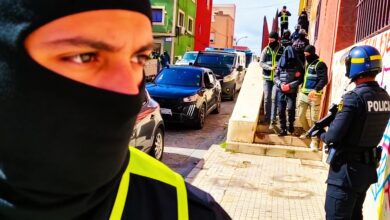
Professional associations of Civil Guard officers believe the summer reinforcements are insufficient. They insist on the need to increase staff numbers, especially in the maritime unit, as well as to modernize equipment. According to their estimates, effective coastal operations require at least 200 personnel and expanded infrastructure, in particular extending the breakwater at the El Tarajal border, which could help reduce attempts at illegal crossings.
In recent weeks, Ceuta has witnessed tragic incidents: the bodies of two young people who died trying to swim to Spain were found at sea. Since the start of the year, the number of deaths at this section of the border has reached 21, including four in August alone.
Civil Guard officers note that working under such conditions involves constant risk: long patrols, poor visibility, the danger of falling into the water, and the difficulty of rescuing people who often refuse to approach the boats out of fear of being sent back. Despite their professionalism and dedication, many admit that without additional resources and structural changes, coping with the growing influx of migrants is becoming increasingly difficult.
For now, the Ministry of the Interior is not planning large-scale reinforcements, but it does not rule them out if the situation escalates further. The question of designating Ceuta as an area of special significance, which would allow for extra funding and personnel, remains unresolved.