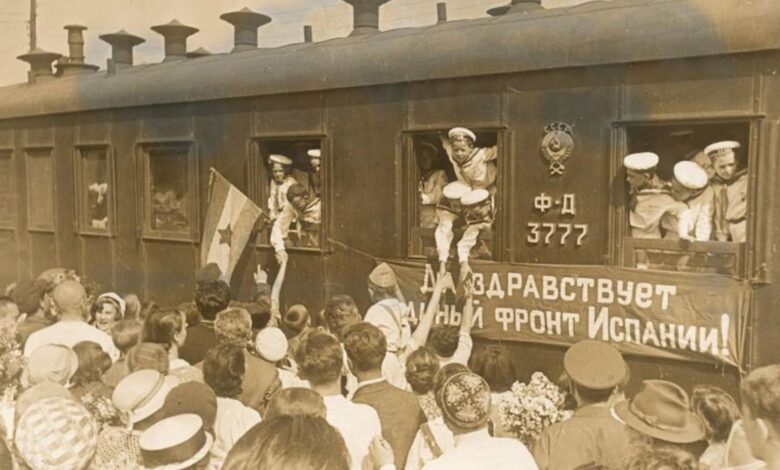
A silent drama is unfolding in Spain, one that few dare speak about. People who survived two wars and decades in exile now find themselves caught up in international sanctions. They are all over 80, some even past 100. These are the so-called Spanish children—those evacuated to the Soviet Union in 1937 to escape bombings and starvation. Today, they are called the “children of war,” but now they are pensioners who have stopped receiving payments from Russia. No one knows when, or if, the situation will change.
Lost Years
Honorina Fernandez’s story could be straight out of a textbook. At 12, she left her hometown of Gijón with her brothers to survive. In Russia, she became a doctor, worked as a pediatrician, and after the Soviet Union collapsed, returned to Spain. Until recently, Honorina received a Russian pension—about 300 euros a month. But in 2025, the payments stopped. She passed away before ever receiving her money. Her son Miguel doesn’t hide his frustration: “It’s cruel. My mother deserved a peaceful old age.”
There are dozens of such stories. Of the three thousand Spanish children who were taken to the USSR, many stayed, found work, and built their lives there. When they returned home, they relied on a pension guaranteed by an agreement between Russia and Spain. Now, those funds are stuck somewhere between banks and sanctions. The last payments arrived in December 2024.
Sanctions and Bureaucracy
The reason is both simple and absurd: international sanctions against Russia. The European Union has blocked financial flows, and now even pension payments are off limits. Spanish authorities shrug—they can’t change European laws. The Ministry of Economy refers to its obligations to the EU, while the Ministry of Social Protection admits: the situation is a deadlock, and for now, there is no solution in sight.
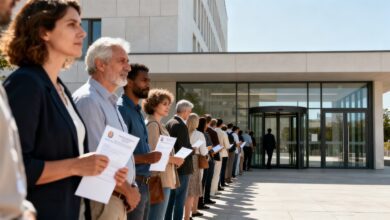
Pensioners and their families are reaching out to officials, filing complaints, and demanding answers. But the bureaucracy works slowly, and for these people, time is the most precious resource. Many have lost hope of ever receiving their money. Some are surviving on the minimum Spanish pension, while others are forced to seek help from relatives.
Personal tragedies
Lina, now 89, worked as an editor in Russia. Her pension—about 200 euros a month—has also vanished. She now lives in Madrid on 600 euros, supplemented by the Spanish system. “Prices keep rising, and the money doesn’t go far. Sometimes, I don’t know how I’ll make it to the end of the month,” she admits. Her brothers are in the same situation.
The problem has affected not only those who left for the USSR during the civil war. It also includes those forced to leave Spain under Franco—the children of repressed anti-fascists. For example, Santiago Álvarez, who spent eleven years in Russia working at a factory, now isn’t receiving his entitled 100 euros per month. For him, this isn’t critical, but he knows people for whom that money is a matter of survival.
No right to decide
Spain cannot intervene directly. The European Union requires blocking all financial transactions with Russia, even when it comes to pensions. Banks are unwilling to take the risk, and the Russian Pension Fund cites the inability to transfer funds due to disconnection from SWIFT. The result is a vicious circle where the most vulnerable suffer.
The Ministry of Foreign Affairs promises to investigate the reasons and contact the Russian authorities, but so far, the matter is limited to correspondence. A similar situation occurred in 2022, when the problem was resolved after government intervention. This time, it is much more complicated.
Time is running out
Economist Francisco Lago, head of the association “Children of Russia,” believes Spain should at least temporarily cover the payments. But officials are slow to respond. Affected pensioners are getting older, and they simply don’t have the strength to wait. “We can’t wait for the war to end to receive our money,” says Santiago. His father was one of the communist leaders in Galicia, endured prisons and exile. The family wandered through different countries until Santiago ended up in Russia at the invitation of Dolores Ibárruri.
Aurora Zapirain, the daughter of another victim of repression, is also not receiving her pension. She worked in Russia for 24 years, returned to Donosti, but now has to live without support. “At first, I thought it was just a delay, but time passes and there’s still no money,” she says. Her voice is filled with fatigue and disappointment.
The fate of these people serves as a reminder of how easily politics can disrupt lives. They have endured wars, exile, and returning to their homeland. Now they are forced to fight for what is rightfully theirs. While politicians argue, their time is slipping away for good.