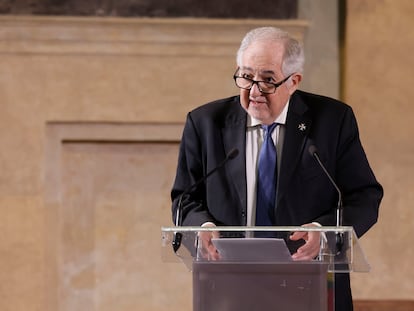
Spain is once again debating the independence of its judiciary. This time, the discussion was sparked by remarks from the head of the Constitutional Court, Cándido Conde-Pumpido, who expressed concern over attempts to influence the implementation of the country’s highest court rulings. According to him, pressure comes not only from politicians but also from the media and other government agencies.
Speaking at a conference on constitutional justice, the court’s president highlighted that such interference can seriously damage the court’s authority and effectiveness. He stressed that the Constitutional Court holds a unique position in the system of power, as its decisions are final and binding for all branches of government.
Conde-Pumpido is particularly troubled by attempts to use various legal mechanisms to delay or even avoid complying with court rulings. In his view, such actions undermine the foundations of the rule of law and could lead to a crisis of confidence between institutions.
Reflecting on recent years, the court president highlighted the importance of the 2015 reform, which expanded the Constitutional Court’s authority to oversee compliance with its own rulings. In his view, this measure played a crucial role during the political crisis in Catalonia, when the regional parliament refused to comply with the court’s orders. Thanks to these new powers, the court was able to enforce its decisions even in the face of open opposition.
Conde-Pumpido also addressed the issue of judges’ terms. He acknowledged that there could be minor delays in appointing new court members if political forces are unable to reach a quick agreement. However, he warned that prolonging the process might negatively impact the court’s work. As an example, he pointed to the situation with the Council for the Judiciary, where the terms of office were exceeded by twice the intended duration.
In closing, the court president reminded that the Constitutional Court is responsible for protecting citizens’ fundamental rights. In particular, he emphasized that issues related to abortion must be considered from the perspective of rights and freedoms enshrined in the Constitution. In his opinion, women should have the opportunity to exercise their right to terminate a pregnancy within the framework of existing legislation.