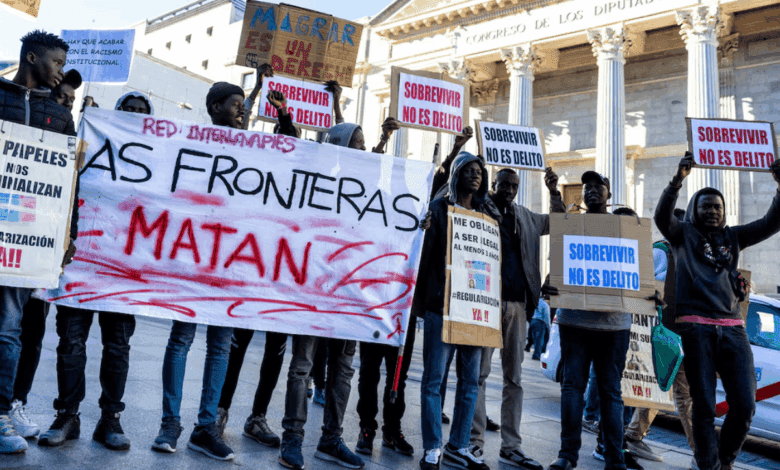
In the coming months, Spain will face one of the most debated initiatives in recent years — the emergency legalization of undocumented migrants residing in the country. This decision has already sparked heated debate among politicians, businesses, and community organizations. For many Spaniards, the issue is not only legal but also concerns the future of the labor market, social stability, and national identity.
The government, together with Podemos, has announced the launch of a special procedure allowing foreigners without legal status to apply for legalization from early April to the end of June. Authorities promise that each application will be reviewed within three months, and once documents are submitted, migrants will be able to work officially in any sector and anywhere in the country. According to representatives of the cabinet, this approach aims not only to ‘recognize and protect’ people’s rights, but also to give the economy a new boost.
A turning point
Minister of Social Protection, Migration and Inclusion Elma Saiz called the agreement with Podemos historic and emphasized that it opens a new chapter in the treatment of those who already live and work in Spain. According to her, for the first time in a long time, the state is committed to act quickly and transparently, so as to prevent procedural delays and bureaucratic red tape. Officials stress that the administration now has clear deadlines and intends to meet them.
Sais is convinced that migration brings tangible benefits to the country. She pointed out that about 14% of all registered workers are already foreigners, and their contribution to the economy cannot be ignored. According to the minister, the new wave of legalization will not only bring thousands of people out of the shadows but also strengthen social guarantees for all residents of the country.
Opposition reaction
However, not everyone in parliament shares the government’s optimism. Representatives of the Partido Popular (PP) accused the cabinet of trying to divert attention from other pressing issues, in particular the recent railway tragedy in Adamuz. Nevertheless, the PP had previously supported the idea of considering legalization itself, and party leader Alberto Núñez Feijóo had publicly stated the need to take the humanitarian aspect of the issue into account.
Today, the opposition faces a difficult dilemma: to support an initiative approved by both the Catholic Church and the country’s largest business associations, or to side with the tougher stance promoted by the Vox party. Behind the scenes in parliament, debates continue over whether mass legalization will lead to increased social tension or, on the contrary, help stabilize the labor market and reduce illegal employment.
Economy and rights
Authorities emphasize that the new procedure is carried out in strict accordance with the constitution and involves amending the law on foreigners. According to Sais, this will not only protect the rights of migrants but also ensure transparency for all parties involved. Significantly, after submitting their application, foreigners will be able to start working immediately, without waiting for a final decision.
Experts note that such fast processing times are rare for Spanish bureaucracy. This could set a precedent for other reforms if the initiative proves successful. However, questions remain: will agencies have enough resources to handle the influx of applications, and could new conflicts arise in regions where unemployment is already high?
Political stakes
Ahead of the vote in the Council of Ministers, each party is forced to determine its position. Sais reminded that responsibility for the initiative’s future now rests with the deputies: they must decide whether to support the government and its allies or side with the opposition and Vox. The authorities insist they have done everything possible to ensure transparency and efficiency, but the final word belongs to parliament.
Heated debates continue in society: some see legalization as a chance for thousands of families to come out of the shadows, while others fear it may bring new challenges to the social system. In any case, the decision to be made in the coming weeks will determine not only the fate of migrants, but also the balance of power in Spanish politics for years to come.