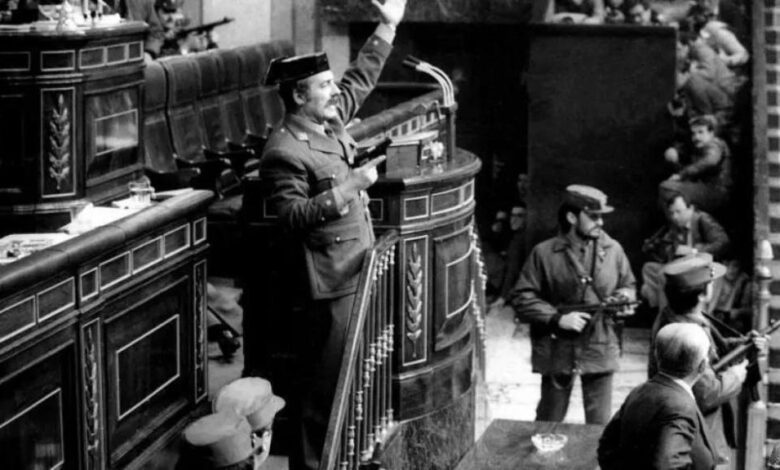
The Spanish government’s decision to declassify archival materials related to the events of February 23, 1981 (23F) could become a turning point for the entire country. It’s not just about historical justice—it’s about how society will protect its democratic foundations in the future. At a time when political tensions remain high and new threats loom on the horizon, such measures can reshape attitudes toward the past and strengthen trust in institutions.
Deputy Prime Minister and Minister of Finance María Jesús Montero believes that publishing the documents about the attempted military coup is not merely a gesture of transparency, but a practical tool to prevent similar scenarios from recurring. In her view, decades after those events, society deserves to know the details of the investigation to avoid mistakes and reinforce the will of the people as expressed at the polls.
Political disagreements
However, not all political forces supported the initiative. Representatives of the Partido Popular (PP) called the government’s decision a distraction and accused their opponents of trying to cover up their own missteps. Montero, in turn, believes that the reluctance to open the archives stems from concerns about the roles certain politicians played at the time. She emphasizes that only complete transparency will allow society to draw conclusions and prevent manipulations.
In recent months, Spain has faced heated debates over the government’s responsibility for crisis situations. For instance, after the Adamuz tragedy, the opposition demanded immediate explanations and even raised the issue of the prime minister’s resignation. More details about this political standoff can be found in the article about the pressure on Sánchez following the Adamuz accident.
The church’s role and new threats
The issue of opening the 23F archives coincided with growing concerns about the rise of far-right movements. Montero pointed out that even representatives of the Catholic Church, including Pope León XIV, have expressed alarm over the surge in radical sentiments. According to the minister, support for such groups poses a threat to democracy and encourages discrimination.
She also noted that xenophobic and hostile statements are increasingly heard in public discourse, becoming part of everyday political rhetoric. Montero believes it is important for society not to remain indifferent to such phenomena, and for state institutions to respond to them promptly.
Implications for the future
The publication of documents about the 23F coup attempt may become not only a step towards historical truth, but also an important lesson for future generations. According to authorities, openness and honesty are key to preventing the repetition of tragic mistakes from the past. At a time when political polarization is increasing and trust in institutions is being tested, such decisions are especially valuable.
As reported by Ale Espanol, the government initiative aims not only to meet the interests of researchers, but also to strengthen democratic traditions. Authorities emphasize that only by knowing the truth about the past can a sustainable future be built.
In recent years, Spain has repeatedly faced attempts to reassess historical events and reconsider the role of various political forces. Similar processes have been observed in other European countries, where the opening of archives has sparked public debate and a reevaluation of national identity. The surge of interest in the 23F topic is linked not only to anniversary dates but also to current challenges facing democracy today. It is important to remember that such decisions can change not only perceptions of the past, but also influence the political culture of future generations.