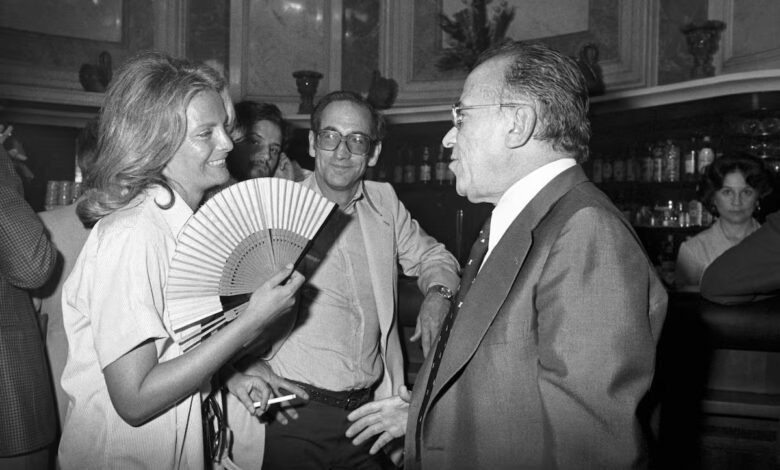
At the end of May 1977, Carmen Díez de Rivera unexpectedly found herself at the center of political rumors. After being dismissed as head of Adolfo Suárez’s Cabinet, she was rumored to have ties to espionage and even to be under house arrest. The president himself called to deny these speculations, but the relationship between them was already strained. Carmen declined the advisory position offered to her and refused the prestigious state award Suárez wanted to give her. Decades passed, and only now has her name resurfaced at the national level.
In November, on the anniversary of Díez de Rivera’s death, Prime Minister Pedro Sánchez announced that she would be posthumously awarded Spain’s highest civilian honor—the Encomienda of the Order of Carlos III. This came as a surprise to her family, as Carmen had been largely forgotten for many years and her contribution to Spain’s history remained underappreciated.
A woman of change
Carmen Díez de Rivera became the first and only woman to head the Office of the President of Spain. During the transition from dictatorship to democracy, she was one of the few women to wield real political power. Her views were progressive: she advocated for the legalization of the Communist Party and insisted on equal rights for women in politics.
Diez de Rivera was never afraid to go against the grain. Her political career was marked by a complex evolution of views: she changed parties, but always remained true to the ideals of democracy and social justice. Within the government, she often faced misunderstanding and resistance, yet she never wavered from her beliefs.
A forgotten heroine
Despite the significance of her work, Carmen Diez de Rivera’s name remained in the shadows for a long time. She did not seek the spotlight, preferring to work behind the scenes. Her life was dedicated to championing women’s rights, defending democratic values, and standing up to injustice.
In 1999, Carmen passed away at the age of 57 after a long illness. Her passing went almost unnoticed by the wider public, and over time her memory faded. Only years later did the state decide to restore her rightful place in history.
Official recognition
The decision to honor Diez de Rivera was a symbolic gesture. Authorities have acknowledged that her contribution to building modern Spain was underestimated. Carmen’s family received the news with both surprise and regret that recognition came so late.
Today, Diez de Rivera’s name is once again being discussed in public debates. Her story serves as an example for new generations of women striving for change and equality. Officials emphasize that figures like Carmen deserve not only awards but also to be remembered.
In case you didn’t know, Carmen Díez de Rivera was one of the key figures on Spain’s political stage during the transition to democracy. She became known not only as the first woman to hold such a high office, but also as a committed advocate for reform, equality, and human rights. Her name is linked to major events in Spain’s modern history, and her personal story has become a symbol of the struggle for change and justice.