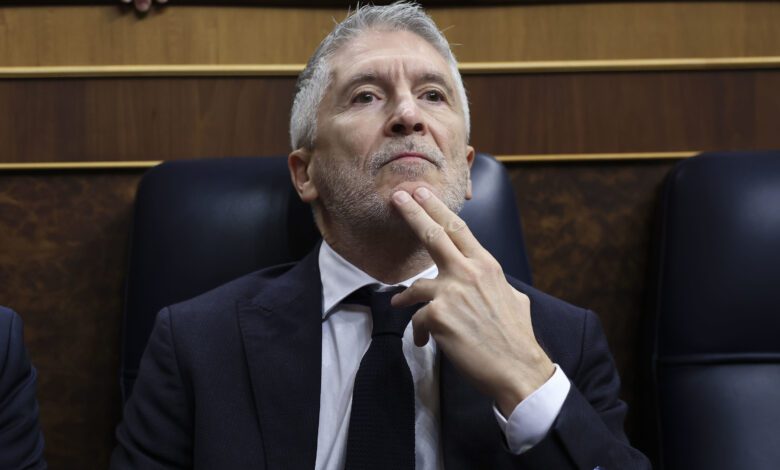
A scandal surrounding Spain’s Ministry of the Interior (Ministerio del Interior) has once again raised questions about government transparency and accountability. Allegations against a senior official of the National Police (Policía Nacional) have triggered a strong reaction in both society and parliament. The spotlight is now on Minister Fernando Grande-Marlaska (Fernando Grande-Marlaska), who finds himself having to answer not only for the actions of his subordinates but also for the political fallout of the situation.
The discussion about the minister’s responsibility became especially acute after journalist Carlos Alsina (Carlos Alsina) on Onda Cero radio drew attention to the fact that, even without direct evidence of knowledge or cover-up of the incident, the head of the department cannot ignore the political aspect of the issue. According to Alsina, the mere fact that the suspect held a key position within the Interior Ministry structure requires the minister to reconsider his stance.
Responsibility and politics
Spanish society is now questioning whether the minister’s lack of direct involvement in the incident is enough for him to remain in office. Alsina stressed that the minister is not responsible for the private lives of employees, but he is the one who appoints leaders on whom trust in the entire system depends. If attempts to pressure the victim are confirmed, the issue will go beyond personal accountability and point to failures in the management of the whole structure.
According to El Confidencial, the parliamentary debate was marked by shouting and applause, further intensifying tensions. The opposition is actively leveraging the situation to pressure the minister, although, in the journalist’s view, there is still no evidence that Marlaska was aware of what was happening or tried to conceal information. Nevertheless, he remains politically responsible for appointing and overseeing key figures.
Public and parliamentary response
Tensions in parliament and society persist. Many are demanding immediate action, believing that such cases undermine trust in state institutions. The surge of emotions in the Congreso de los Diputados highlighted just how acutely such accusations are perceived in contemporary Spain. It is important to note that the debate goes beyond the guilt or innocence of specific individuals—it’s about the fundamental principles guiding the entire system.
During the debates, there were calls for resignation as well as calls for objectivity. Some parliamentarians reminded their colleagues that any accusations must be proven in court, not just in the public arena. However, as observers point out, even the absence of direct evidence does not absolve leadership from the need to reassess how personnel are selected and supervised.
Parallels and consequences
The situation with the Ministry of Internal Affairs is reminiscent of recent political crises, when pressure on officials mounted due to errors or suspicions within their circles. For instance, in a similar case related to the tragedy in Adamuz, the opposition also demanded immediate explanations and resignations, as covered in detail in the article about the political storm surrounding the accident in Adamuz. Such cases demonstrate that society increasingly expects the authorities not only to formally comply with the law, but also to take moral responsibility for what is happening.
According to El Confidencial, in this case, the issue is not about direct violations of the law by the minister, but rather about the need to rethink management standards and personnel selection. The question of whether the minister should resign remains open and depends not only on legal, but also on ethical criteria shaped by public opinion.
In recent years, Spain has faced several high-profile scandals involving the conduct of senior officials and police officers. Each of these cases sparked debates on the need for reforms and tighter control over the actions of leaders. Consider, for example, the recent debates about transparency in government bodies and the requirements for more rigorous selection of candidates for responsible positions. These events highlight that trust in the authorities is built not only on laws, but also on examples of personal responsibility demonstrated by leaders.