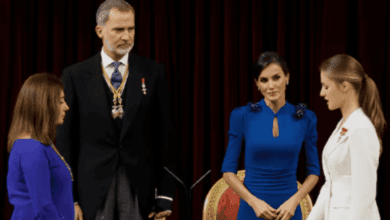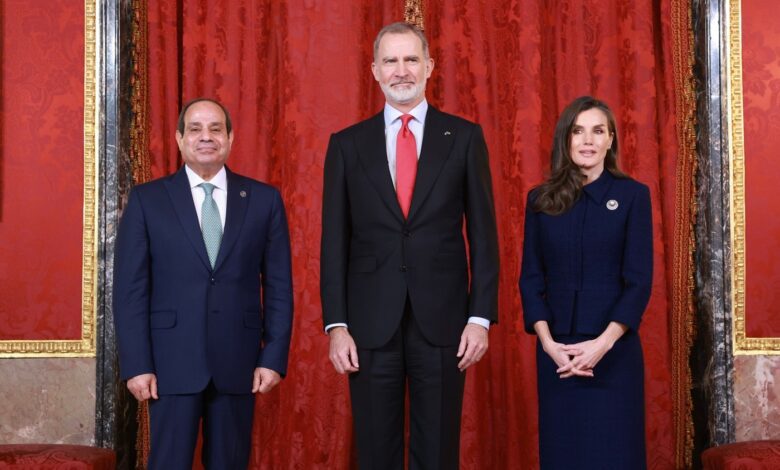
At the start of the week, King Felipe VI and Queen Letizia arrived in Egypt for their first state visit, which will last three days. Their itinerary includes Cairo and Luxor, with both official meetings and cultural events planned. The visit comes at a challenging time for the region: Israel continues its military operation in the Gaza Strip, while Egypt, which borders the conflict zone, is striving to maintain a fragile balance.
Egypt is the largest country in Africa and a key player in the Middle East. It shares borders with Libya, where internal strife has persisted since 2011, with Sudan, gripped by civil war, and with Israel and the Gaza Strip, where hostilities have continued since October 2023. President Abdel Fattah el-Sisi is trying to shield the country from turmoil that has lingered since the events of the ‘Arab Spring.’
In this context, the Spanish monarchs aim to strengthen their country’s position as a mediator between Europe and the Arab world. The visit includes talks with the Egyptian leadership, discussions of economic and cultural projects, as well as a demonstration of support for a region suffering the consequences of war. Spain emphasizes its commitment to seeking peaceful solutions and its readiness to promote dialogue between the parties.
Egypt’s role in resolving the Middle East conflict can hardly be overstated. The country remains one of the few mediators able to influence the situation in Gaza and participate in ceasefire talks. However, Egypt itself faces significant challenges: its economy is under pressure due to falling revenues from the Suez Canal, and public debt continues to rise. At the same time, the country is dealing with an influx of refugees from Sudan and Palestine, and authorities are concerned about a potential mass exodus of Gaza residents through the Rafah border crossing.
In the economic sphere, Spain sees new opportunities. Egypt is aiming to increase its share of renewable energy, and Spanish companies may take part in energy and infrastructure projects. In particular, joint initiatives are being discussed in gas extraction, water desalination, and the development of green technologies.
However, behind the official meetings lies a tense domestic situation. Egyptian society is under tight control: freedom of speech is restricted, political opponents and activists face persecution, and in recent months, authorities have ramped up pressure on social media users. Many Egyptians compare the current regime to the Mubarak era, noting increased repression and the lack of real change since the 2011 revolution.
During their visit, the King and Queen of Spain will tour not only political institutions but also cultural sites. In Luxor, they will participate in the ceremony to inaugurate the new lighting at the Temple of Hatshepsut, visit the museum and tombs in the Valley of the Kings, and learn about the work of Spanish archaeologists. Thus, the monarchs’ trip serves not only as a diplomatic gesture but also as an opportunity for Spain to strengthen its cultural and economic ties with Egypt, as well as to assert itself as an important partner in the region.