Amid the growing influence of right-wing forces and instability among Spain’s progressive parties, the question of the future of the leftist movement has taken on added urgency. Any decision made now could shape the outcome of the upcoming elections and determine who will set the country’s agenda in the years ahead. For many voters, this is more than just a political game—it is about real change in social and economic life.
The spotlight is now on the groups within the Sumar coalition: Más Madrid, Izquierda Unida, Movimiento Sumar, and Comunes. They have announced plans to form a new political platform, with its presentation scheduled for February 21. The aim is to rethink and renew the project previously led by Yolanda Díaz in 2023. This time, the focus is on broader unity to counter fragmentation and strengthen the left’s position at the national level.
Challenges to Unity
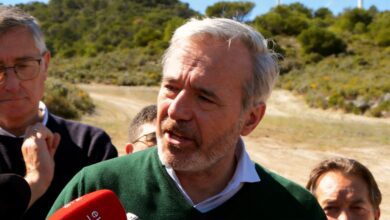
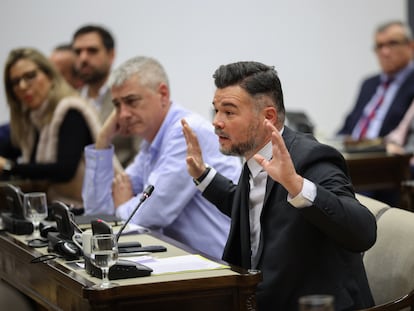
Meanwhile, Gabriel Rufián put forward an initiative to unite all left-wing forces ahead of the upcoming elections. However, his proposal met resistance even within his own party. Despite this, the idea attracted interest from several politicians, including former minister Alberto Garzón, who publicly endorsed the need for dialogue among the various leftist groups. Garzón emphasized that it is now important not only to discuss new forms of cooperation but also to listen attentively to proposals from all participants in the process.
Garzón expressed confidence that even if some parties, such as Podemos, are not yet ready to join the alliance, the situation could change. In his view, most left-wing politicians already recognize the need for joint action, although an optimal solution for putting this idea into practice has not yet been found. He also noted that if the left remains divided in elections, it could lead to an easy victory for right-wing forces, which would pose a serious challenge to the entire progressive agenda.
Challenges and hopes
According to Garzón, the modern left-wing scene in Spain has become much more complicated compared to previous years. There are more players, disagreements have intensified, and old grievances have accumulated. This is compounded by a general decline in the popularity of leftist ideas not only in Spain, but worldwide. In such a climate, building a unified strategy becomes increasingly difficult, yet the stakes are too high to afford inaction.
Garzón noted that despite the difficulties, he remains optimistic. He believes the left has the potential to unite if it can overcome internal divisions and focus on shared goals. He paid special attention to Rufián, who, in his opinion, has managed to earn trust not only in Catalonia, but among the wider progressive audience across the country. According to Garzón, this opens up new opportunities for building a broad coalition.
Questions of leadership
At the same time, the question of who should lead a possible unification remains unresolved. Garzón refused to comment on the roles of Yolanda Díaz and Irene Montero, stressing that at this stage, it is more important to establish common principles of cooperation than to define leaders. He pointed out that political processes often develop unpredictably: we know how integration begins, but it is impossible to foresee what it will ultimately lead to.
Today, Garzón is engaged in academic work at the Institute of Environmental Science and Technology at the Universitat Autònoma de Barcelona (UAB) and has recently published a book on global energy conflicts. His perspective stands out for its analytical approach and focus on compromise, making his opinion especially valuable for those discussing the future of the left-wing movement.
In recent years, Spanish politics has repeatedly faced attempts to unite the left. After the 2023 elections, coalitions were often formed in response to public demand for change, but internal disagreements and power struggles hindered the creation of stable alliances. Similar processes have been observed in other European countries, where left-wing parties have sought new forms of cooperation to counter the growing popularity of right-wing movements. In Spain, such initiatives have already led to a temporary strengthening of progressive forces, but a lasting effect has yet to be achieved. Now, amid new challenges, the question of left-wing unity is once again central to the country’s political future.