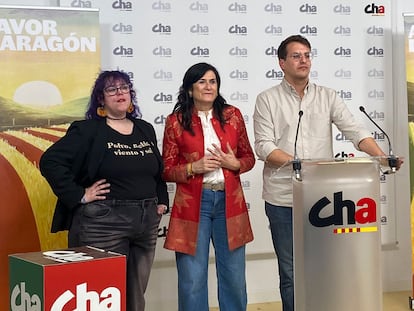
The question of the future of the left-wing movement in Spain has once again come to the forefront after the disappointing elections in Aragón. Gabriel Rufián’s attempt to unite various leftist forces into a broad coalition sparked intense debate and highlighted deep divisions among the parties. For Spaniards, this means the prospect of a united front against the rise of right-wing forces remains uncertain, and political instability may only intensify.
Rufián, a representative of the ERC party and a prominent figure in Congress, has notably strengthened his position among left-wing voters over the past year. His idea to form a multinational slate for upcoming general elections was seen as an attempt to halt the growing influence of right-wing parties, especially Vox. However, following the left’s defeat in Aragón and the disappearance of Podemos from the regional parliament, leaders of key parties have begun to distance themselves from Rufián’s initiative.
Divisions within the Left
Public statements by the leaders of Más Madrid, EH Bildu, and Sumar have shown that even discussions about the future of the left are taking place outside official structures. Mónica García, leader of Más Madrid, emphasized that debates about the left’s future should be held beyond party boundaries, though she urged for open dialogue among progressive forces. At the same time, representatives of Sumar and other parties expressed doubts about the necessity and feasibility of uniting under a single electoral platform.
Responding to criticism and setbacks, Rufián published an emotional statement urging action over formal discussions. He stressed that combating the rise of right-wing forces requires new approaches and abandoning traditional party boundaries. However, his words prompted a mixed response: some saw them as a call for unity, others as an attempt to strengthen his own influence.
Party and Leader Positions
There is also no consensus within Sumar and Izquierda Unida (IU) regarding a merger. Deputy Prime Minister Yolanda Díaz stated that the format of the union is less important than agreeing on a minimal program capable of mobilizing voters and countering the conservative wave. Lara Hernández, Sumar’s coordinator, supported the very idea of discussion, but emphasized that specific steps and the structure of a possible alliance have yet to be determined.
At the same time, IU coordinator Antonio Maíllo opposed ‘hyper-leadership’ and ‘political soap operas,’ urging dialogue among grassroots party members rather than just between leaders. He pointed out that the main goal is to prevent the far right from coming to power, but this requires real work on the ground, not just loud statements.
Skepticism and Caution
Podemos Secretary Pablo Fernández and former Vice President Pablo Iglesias expressed doubts about the feasibility of the merger. Iglesias noted that Rufián has significant media capital, but without the support of party structures, his initiative is doomed to fail. He reminded that even close relationships between leaders do not guarantee success without the approval of all parties involved.
Internal party disagreements are worsened by competition among regional organizations, such as Comunes in Catalonia, which have traditionally competed with ERC. This makes the task of creating a single list even more complicated, as each party seeks to maintain its own identity and influence at the regional level.
Prospects and uncertainty
Despite regular informal contacts between the parties, no concrete steps have yet been taken toward forming a broad coalition. The most active work is taking place among IU, Más Madrid, Comunes, and Sumar, who are trying to develop common principles for a future project. However, the inclusion of other organizations in this process remains in question.
So far, most leaders prefer not to make public statements either supporting or criticizing Rufián. In their responses to journalists, there is a note of caution: rather than discussing the format of the merger, the focus is on the need to develop a common strategy and program capable of attracting disillusioned voters.
In recent years, attempts to unite the left-wing forces in Spain have repeatedly faced difficulties. After unsuccessful elections in Andalusia and Madrid, as well as the failure of Podemos in several regions, the need for a united front is being increasingly discussed. However, every time, old disagreements between parties and leaders, along with competition for influence in key regions, stand in the way of unity. As a result, despite numerous calls for consolidation, the left continues to act in a fragmented manner, which benefits their opponents.