An event in Jerusalem is already being hailed as sensational by the musical and historical community. Spanish musicologist David Catalunya, together with a team of specialists, has managed to bring back to life an organ originally built in the 11th century. According to experts, this instrument is considered the oldest and best-preserved of all known Christian organs.
The restoration work took several years and took place within the walls of the San Salvador monastery, home to a Franciscan community that carefully preserves Christian relics of the Holy Land. Catalunya became interested in the organ while studying medieval music technologies at Oxford. During his research, he came across a reference to a mysterious instrument found in Jerusalem and decided to investigate it personally.
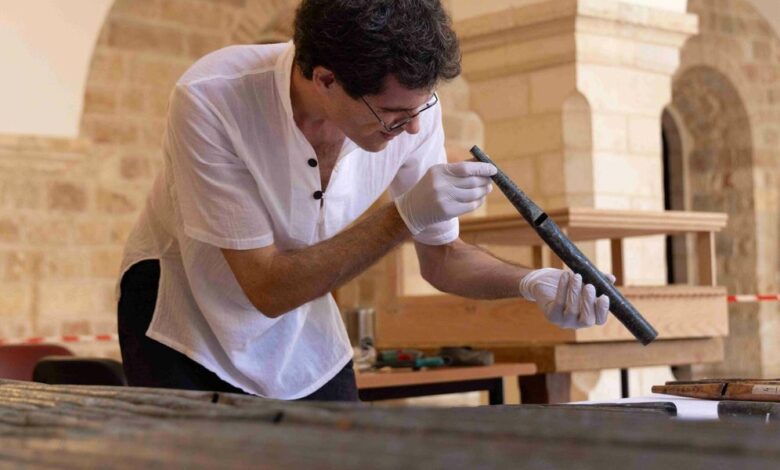
When the scholar was granted permission to visit the monastery, he discovered two old chests hidden in the attic. Inside were hundreds of bronze pipes, carefully wrapped in paper. Catalunya spent several hours sorting them by size and compiling a detailed inventory. In total, he was able to identify 222 pipes, although the original organ included 342 parts. Despite their age, many components remained in excellent condition, as if they had been made just recently.
The instrument was created in France and later transported to the Holy Land, where it was used in the 12th century. Fearing invasions, the Crusaders eventually hid the organ underground, where it remained for more than seven centuries. It was only in the early 20th century that archaeologists discovered these relics during excavations near the Bethlehem Basilica of the Nativity.
Cataluña and his team not only undertook the restoration but also produced exact replicas of the pipes to test whether the instrument could regain its voice. To everyone’s surprise, eight original pipes sounded, filling the vast monastery hall with ancient melodies. Although the organ’s full range could not be restored, the surviving pipes cover all the main registers—low, middle, and high.
For the researchers, this experience was truly a journey through time. For the first time in centuries, they heard the authentic sound that accompanied worship services a thousand years ago. Cataluña acknowledges the immense responsibility of preserving this unique discovery. In the future, the organ will be displayed at the Terra Sancta Museum Art & History, so that everyone can come closer to history.
For the musicologist himself, this project was more than a scientific achievement—it was the fulfillment of a dream for those who once hid the instrument to save it. Cataluña emphasizes that he does not seek fame; for him, the process itself and the chance to hear voices from the past are more important. It is no coincidence that organ music and the art of organ building have been recognized by UNESCO as part of the world’s intangible cultural heritage.
Now, after fifteen years of his professional career, Catalunia considers this experience the most significant of his life. He is convinced that each instrument has its own character, and interacting with it is always a unique experience. Thanks to his efforts, today we can hear music that once played in temples a thousand years ago, as if transported for a moment into the distant past.