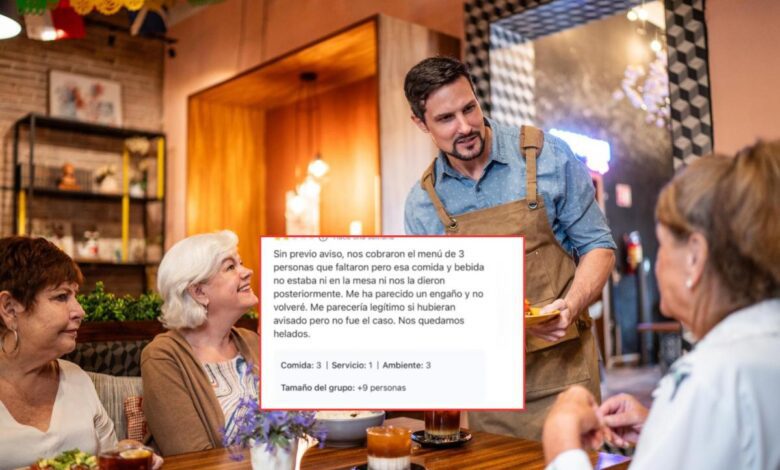
A scandal erupted at a Spanish restaurant, quickly becoming a hot topic on social media. A group of 18 reserved a table and agreed on a fixed menu for all attendees. However, only 15 guests showed up on the appointed day. Three simply didn’t arrive, without notifying the restaurant of their absence. As a result, the restaurant added the cost of the menu for the missing guests to the bill, which sparked outrage from one of the clients.
Leaving a review on a popular platform, the guest expressed anger over being charged for food and drinks no one received. According to him, if they had been informed about this policy in advance, there would have been no complaints. But in the client’s view, it felt like deception, and he promised never to return to the establishment.
The owner’s response
The restaurant owner did not stay silent and publicly addressed the complaint. His response was just as emotional as the original review. He noted he was just as surprised as the guests to find three people missing at the table. According to him, the kitchen had already prepared dishes for all 18 guests, and canceling the order was impossible — the menu had been agreed on in advance and was intended for a specific event.
The owner emphasized that all dishes, including desserts, were served on the table, and the missing portions of dessert were placed in the center for anyone to share. He also reminded that the staff accommodated all allergy and intolerance requests to ensure every guest was satisfied. In closing, the restaurateur urged clients to act responsibly and avoid leaving thoughtless reviews without considering the consequences for the business.
Restaurant losses
No-shows for reserved tables are a common issue for Spanish restaurants. For them, this means not only lost potential revenue but actual financial loss: ingredients are purchased, dishes are prepared, and the tables could have been filled by other patrons. In recent years, many restaurants have started requiring prepayment or credit card details when booking to protect themselves from such situations.
However, not all customers are willing to accept these terms. Some see it as an infringement of their rights, while others view it as a necessary measure to protect the business. In any case, the conflict between guest expectations and restaurant interests is becoming increasingly acute.
Rules and nuances
From a legal standpoint, venues do not have the right to charge solely for the act of making a reservation. However, if there is a prepayment or deposit that is later deducted from the final bill, this practice is considered acceptable. This is especially true for large groups or events with a set menu, where the restaurant incurs additional preparation costs.
In such cases, it’s important to inform clients in advance about cancellation policies and possible fees. This helps avoid misunderstandings and conflicts like the one described above. However, as practice shows, even the most transparent conditions do not always prevent dissatisfaction and harsh reviews.
The debate continues
The incident involving charges for no-show guests has sparked lively debate in Spanish society. Some support the restaurant owner, seeing his actions as fair and necessary for business survival. Others side with the customer, insisting such measures must be as transparent as possible and agreed upon in advance.
The question of who is right in this case remains open. But one thing is clear: the restaurant culture in Spain is changing, and both customers and owners are having to find new ways to interact. Sometimes this leads to conflicts, but stories like this make us reflect on balancing interests and respecting others’ work.