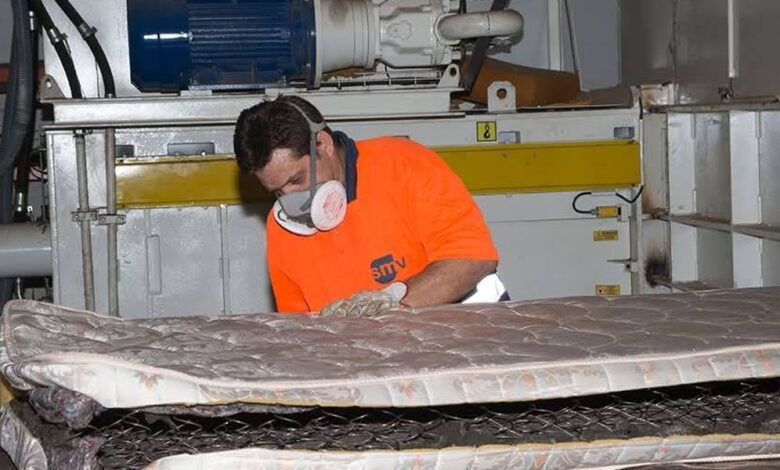
A unique experiment has kicked off in Spain: researchers from the Universidad de Valladolid have started recycling old mattresses for the construction industry. Their goal isn’t just to dispose of bulky waste, but to transform it into valuable materials for new homes and buildings.
The project, known as Rebuilt, has already moved into the practical phase. Scientists are testing two main technologies. The first involves grinding mattresses into fine particles to use the resulting material in place of sand for making tiles and concrete mixtures. According to their observations, such additives not only lower production costs but also improve the properties of finished products.
The second area of research focuses on creating thermal insulation panels. It turns out that mattresses can serve as an excellent base for panels that help retain heat in homes and save energy. Spain is actively supporting projects to boost energy efficiency, and this new technology could become widely adopted.
Savings and sustainability: a double win
There are already examples of successful mattress recycling in Europe, but the Spanish project stands out for its focus on the construction sector. Every year, thousands of mattresses are thrown away in the country, with most ending up in landfills. This new initiative could change that, easing pressure on dumps while offering the market more affordable materials.
Researchers note that the cost of insulation panels made from recycled mattresses is lower than that of traditional counterparts. While they may currently lag behind pure polyurethane in some properties, they are more affordable and environmentally friendly. In the long run, this could make such panels in demand not only in Spain but also abroad.
Challenges on the road to mass adoption
However, things are not so simple. One of the main problems is the variety of materials used in mattresses. There are spring mattresses, different kinds of foam, hybrids, and even inflatable models. Each type requires a specific recycling approach, and the final product can vary in strength and flexibility.
Another challenge is organizing the collection and delivery of used mattresses to recycling facilities. Not all waste centers have the necessary equipment, and online retailers often do not pick up old mattresses from customers. Nonetheless, a modern shredding machine was recently installed in Valladolid, which has already streamlined the process.
The future belongs to green technologies
The project is still in the testing phase, but initial results are encouraging. Even with differences in mattress composition, the newly produced materials demonstrate good performance and cost less than traditional options. In the coming months, researchers plan to continue their experiments and share outcomes with industry professionals.
If this technology progresses, Spain will not only be able to reduce waste, but also take a major step toward more sustainable construction. Soon, used mattresses could become an integral part of new homes, with their recycling becoming an industry standard.