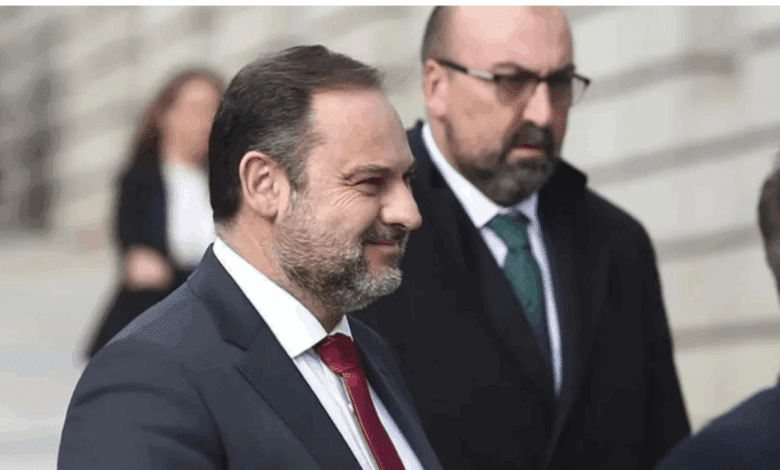
The Spanish Supreme Court has begun reviewing the appeals of former Transport Minister José Luis Ábalos and his adviser Koldo García, both at the center of a high-profile corruption scandal. The two were taken into custody on suspicion of receiving large bribes during the awarding of state contracts for the purchase of medical masks at the height of the pandemic. The judicial panel is evaluating whether the preventive detention was justified, given the stated “exceptional flight risk.”
Judges Juan Ramón Berdugo, Antonio del Moral and Pablo Llarena are examining the arguments from the defense, which is seeking to have their clients released from Madrid’s Soto del Real prison, where they have been held since late November. According to judicial sources, Ábalos and García originally shared a cell but were later separated. They are not attending the hearings in person—their lawyers are representing them. In Ábalos’s case, his former attorney Carlos Bautista, despite disagreements, must finalize procedural formalities, and a new lawyer is also participating in the proceedings.
Previously, the court restricted itself to more lenient measures: a travel ban, passport confiscation, and a mandatory court appearance twice a month. However, according to investigators, new circumstances have emerged that point to a real risk of flight. Among these are the upcoming trial, possible lengthy prison terms (up to 30 years), and serious evidence of crimes, including participation in a criminal organization, abuse of office, embezzlement, and bribery.
Money and connections
Investigators particularly emphasize that the accused had access to substantial amounts of cash. In recent years, according to the court, their need to withdraw money from bank accounts has noticeably decreased, which may indicate alternative sources of funding. In the court’s view, this increases the likelihood that they have the resources to arrange an escape.
Another risk factor cited is the international contacts Abalos and Garcia acquired while working at the transport ministry. After leaving the ministry, Garcia worked as a consultant for several companies investing in Latin American countries. Abalos, in turn, owns property in the region and is allegedly tied to one of the Peruvian foundations, as well as regularly receiving transfers from his son, who works abroad.
According to the court, all these circumstances make the situation unusual and require a special approach. Investigators are convinced that unless strict measures are taken, the accused may use their connections and resources to flee the country.
Defense Arguments
The lawyers for Ábalos and García argue that the case is based on assumptions and lacks solid evidence. In their view, pre-trial detention is an excessive measure that does not correspond to the seriousness of the charges. Ábalos’s defense claims the accusations rely on ‘unfounded speculation,’ and that the former minister, holding such a high position, had no need for large amounts of cash since most expenses were covered by the state.
The defense places particular emphasis on the testimony of businessman Víctor de Aldama, considered a key intermediary in the scheme. According to the lawyers, his confession lacks credibility as he cooperated with investigators in exchange for a lighter sentence. They also point out that the sums cited in the case are not backed by any real findings: during the entire investigation, the average monthly income in cash amounted to only about 500 euros.
García, for his part, disputes the investigators’ findings regarding the unexplained increase in his assets. According to his calculations, his capital grew by no more than 98,000 euros, which, according to his lawyers, can be explained by family savings. In recent statements, García’s defense has even accused the court of political bias and demanded disciplinary action over a leak of information, hinting at pressure on the judges.
Awaiting a decision
The panel of judges must make a decision that could prove decisive not only for those involved in this case, but also for judicial practice regarding corruption crimes across Spain. Hearings on the merits were expected to begin as early as February or March, but Abalos’s change of attorney may delay the proceedings.
Public reaction to the case remains intense: accusations against former high-ranking officials related to the pandemic are drawing particular attention from both the media and ordinary citizens. The question of how fair and objective the investigation is remains open. The defense insists the case is politically motivated, while the investigators cite substantial evidence.
In the near future, the Supreme Court is set to rule on the appeals, and the outcome will largely determine how the case moves forward. Spanish society is closely following the developments, as not only individual fates are at stake, but also the public’s trust in the country’s judicial system.