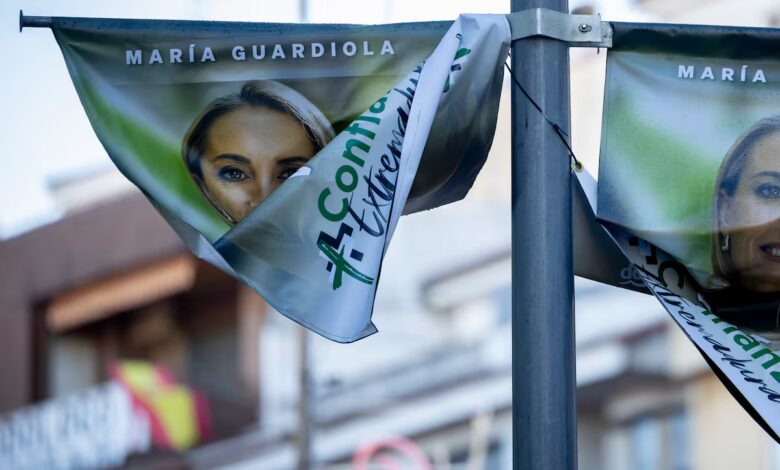
A new political scandal has erupted in Extremadura: a safe containing 124 already submitted mail-in ballots was stolen from the Correos office in Fuente de Cantos (Badajoz). The incident occurred on the eve of regional elections and immediately sparked a wave of accusations between parties. Representatives of Partido Popular (PP) stated that this was not just a crime, but a deliberate attempt to influence the election outcome. The region’s residents heard from the head of the autonomous community, María Guardiola, that their right to participate in the elections was now at risk.
While the Guardia Civil is treating the incident as a standard criminal case, Partido Popular insists the theft could be part of a coordinated scheme to manipulate the results. This kind of claim has surfaced before from the party during election campaigns. Once again, the issue of trust in mail-in voting is being discussed—a recurring topic of political debate in Spain.
Doubts and accusations
Partido Popular leader Alberto Núñez Feijóo, in 2023, called on Correos employees to work tirelessly to ensure all ballots were delivered on time. His remarks, made at a rally in Murcia, sparked mixed reactions: some saw them as an expression of distrust toward the postal service leadership, then headed by former chief of staff for Pedro Sánchez, Juan Manuel Serrano. Feijóo later clarified that he was not accusing anyone of fraud, but was merely expressing concern over delays in ballot delivery.
Partido Popular Secretary Cuca Gamarra has also voiced doubts about the effectiveness of Correos, emphasizing that ties between postal service management and the government could undermine the transparency of the process. Such statements fuel an atmosphere of mistrust and serve as tools in political battles.
Election Rhetoric
In 2023, Madrid President Isabel Díaz Ayuso wrapped up her campaign with strong accusations against Pedro Sánchez, claiming his government resorted to ‘attempts at fraud’ to hold on to power. She spoke of ‘decrees’ and ‘schemes’ allegedly used to influence the election results.
Partido Popular Senator Francisco Bernabé, who was running in Murcia, also publicly expressed concerns over possible irregularities. He noted that a shortage of postal workers could mean not all votes would be counted, and wondered if this might be part of a broader scheme.
Historical Context
Such accusations are nothing new in Spanish politics. In 2022, in Andalucía, European People’s Party Vice President Esteban González Pons claimed that the government sought control over state institutions, including Indra, the company responsible for handling election data. However, the company itself denied being involved in vote counting and emphasized its technical role.
Earlier, in 1993, during the intense vote count, Partido Popular representative Javier Arenas publicly demanded clarification from the Central Electoral Commission about the operation of polling stations. He urged party observers to be especially vigilant, as the election outcome was being decided by a narrow margin. That same night, Rodrigo Rato questioned the accuracy of the electoral rolls, pointing out issues with their updates. Ultimately, after a conversation between King Juan Carlos I and Partido Popular candidate José María Aznar, the party conceded defeat.
Political consequences
Every new election-related incident sparks heated disputes between parties. The theft of ballots in Extremadura has reignited old fears and suspicions, while political leaders use the situation to strengthen their positions. Public distrust in the electoral process is growing, and the issue of election transparency remains one of the most pressing topics in Spanish politics.