The incident with the capsized vessel in O Grove has once again reminded Galicia’s residents of the risks associated with maritime activity. The accident occurred during loading and prompted a large-scale emergency response. In a region where fishing and shipping are integral to daily life, such incidents always attract special attention and public discussion.
In the evening, as the workday was ending, eyewitnesses near the Meloxo port spotted an overturned vessel by one of the many shellfish farming platforms. Three people were on the platform and managed to get out of the water on their own. Their appearance on the surface became a signal for the immediate reaction of rescue services.
Rescue operation at sea
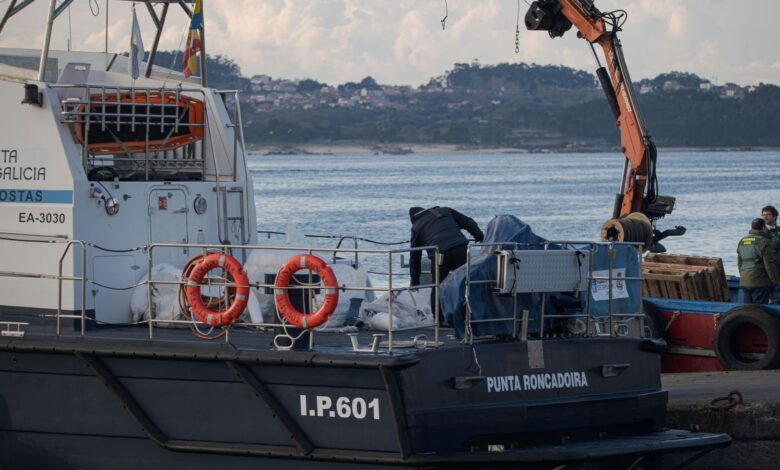
As soon as the alarm was raised, municipal emergency units, maritime security, and police were dispatched to the scene. A helicopter was launched and prepared for evacuation, but its assistance was not required. Despite the stressful situation, the three crew members were not injured and were quickly transported ashore by another vessel.
While rescuers were evacuating the people, attention shifted to the vessel itself. It quickly filled with water and soon sank completely. Despite coordinated efforts by all the response teams, attempts to keep it afloat were unsuccessful.
Causes and consequences
Preliminary reports indicate that the incident was caused by a loss of vessel stability during loading. At that moment, the ship listed, forcing the crew to urgently abandon the deck. Finding themselves on a mollusk farming platform, they avoided serious health consequences.
Representatives from municipal services, maritime surveillance, the Civil Guard, and the local police participated in the operation. Their coordinated efforts helped prevent a tragedy. However, the incident has once again raised concerns over maritime transport safety and the need for strict compliance with cargo-handling regulations at sea.
Response and public discussion
The event sparked lively debate among local residents and the professional community. In a region where maritime activity forms a core part of economic and cultural life, such incidents are felt especially keenly. Many point out that the swift response of rescue services and the availability of appropriate equipment played a critical role in the crew’s safe outcome.
Nonetheless, the loss of the vessel dealt a significant blow to its owners and served as a reminder that even with all precautions, the sea remains unpredictable. Questions about the technical condition of vessels and crew training have once again come to the forefront.
Context and similar cases
In recent years, Galicia has witnessed repeated accidents involving small vessels and fishing boats. In most cases, crews managed to escape thanks to the swift response of rescue teams and the presence of other vessels or platforms nearby. For instance, last year, a successful rescue operation was carried out in the same area after fishermen experienced engine failure on their boat. On another occasion, not far from the coast, a woman was pulled from the water after her paddleboard capsized in strong winds.
Such incidents highlight the importance of constant monitoring of vessel maintenance and regular crew training. In Galicia, rescue services are known for their coordinated action, allowing them to minimize the consequences of even the most unexpected maritime accidents. However, each new case sparks discussion about improving safety measures and serves as a reminder that the sea does not forgive mistakes.