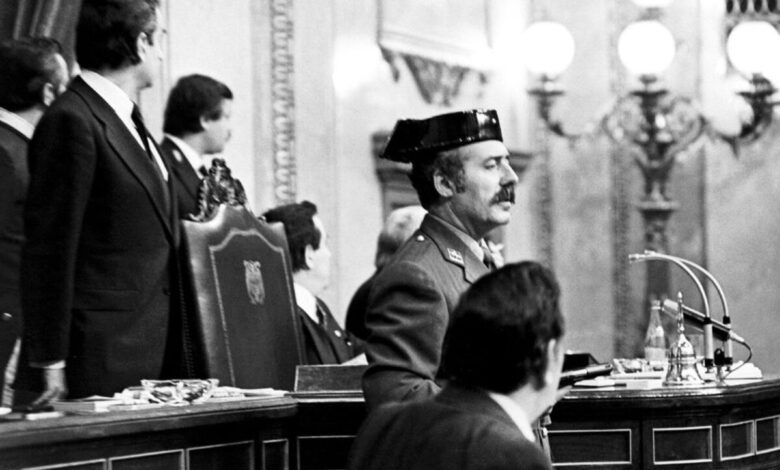
Spain is once again debating prisoners’ rights and the actions of the authorities following the release of secret documents regarding Antonio Tejero’s case. The legality of transferring the former officer to a remote prison has sparked discussions about government transparency and adherence to judicial procedures. For many Spaniards, this story is a reminder of the importance of oversight over executive actions and guarantees of a fair trial.
Transfer without a court order
Antonio Tejero, a former lieutenant colonel of the Guardia Civil, became the subject of attention after being moved to a prison cell in the La Palma castle in Galicia, more than 650 kilometers from Madrid. According to El Confidencial, this step was carried out without a corresponding court order, prompting a sharp reaction from his legal team. Tejero’s lawyer filed a complaint with the Ministry of Defense, citing numerous procedural violations and a lack of justification for such a distant transfer.
In a document dated July 1981, the defense emphasized that the transfer was initiated by the executive branch, not by court order. According to the lawyer, such actions contradict not only the military code but also the basic principles of the rule of law. Special attention was drawn to the fact that the Ministry of Defense did not have the authority to make such decisions independently.
Living conditions and health
The condition of the cell where Tejero was placed also raised questions. According to the lawyer, the facility was extremely humid, which had a negative impact on the inmate’s health, as he suffered from rheumatism and anemia. The defense argued that such conditions could worsen his ailments and hinder his full participation in the proceedings.
Furthermore, the lawyer pointed out that transferring Tejero such a long distance from Madrid created serious obstacles to communication with his defense and complicated preparations for court hearings. While other defendants remained within the capital region, Tejero found himself isolated, which, according to the defense, violated his right to a defense and equality before the law.
Court response and consequences
Particular indignation was caused by the fact that even the specially appointed investigative judge learned about Tejero’s transfer only from television news. This circumstance became an additional argument in favor of the claim that the decision was made without proper notification or coordination with judicial authorities. The defense insisted on Tejero’s return to the military prison in Alcalá de Henares, where the other participants in the case were held.
The legality of the government’s actions has sparked widespread public debate. Many experts and legal professionals see this case as a dangerous precedent, where the executive branch assumes the functions of the judiciary. Similar situations have already been discussed in Spain, such as when the Supreme Court found itself at the center of controversy due to substantial legal expenses— the details of this case raised just as many questions about the transparency of decisions.
Context and similar cases
The case of Tejero’s transfer is not the only instance when government actions have raised doubts about due process. In recent years, Spain has repeatedly debated issues surrounding prisoners’ rights, especially in cases involving political or high-profile crimes. Decisions regarding transfers, detention conditions, and access to lawyers are often points of contention between the defense and state authorities.
In 2024, the country again debated the need to reform the penal enforcement system and to strengthen oversight of prison administration. Civil society organizations and human rights advocates are demanding more transparency and accountability from the authorities to prevent abuses and violations of defendants’ rights. Incidents like the Tejero case fuel new discussions about how to balance security with the rule of law.