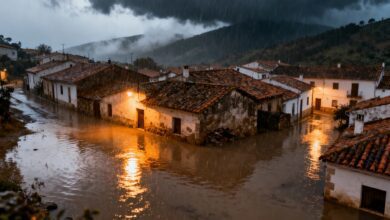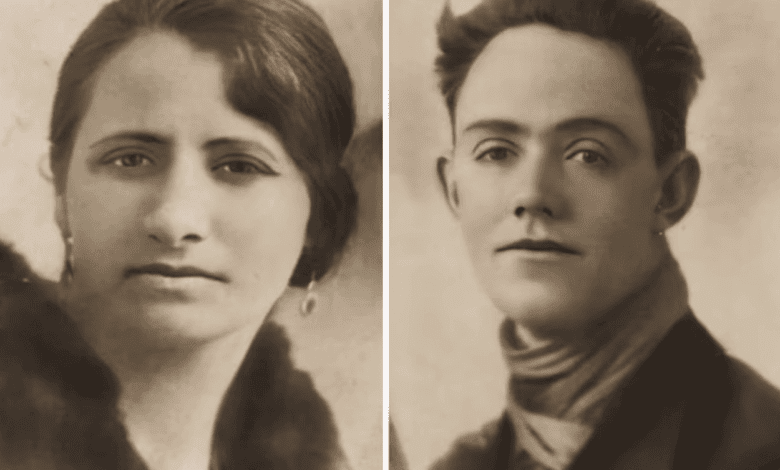
In the small village of Fresnedo near Cubillos del Sil in the province of León, only the wind breaks the silence. Here among the hills, a long-hidden tragedy once took place. In 1936, in the midst of the Civil War, a man and a woman were executed—at the time, no one knew their names. Locals simply called them “Los Garbanzos,” a nickname that nearby resident Martina Fernández happened to overhear. She later pointed out where their bodies were buried, but for the community, these people remained strangers.
Decades passed before anyone remembered the couple. Only the persistence of Santiago Macías, head of the association Semillas de Memoria, finally shed light on their fate. He gathered scattered testimonies and old notes handed to him by an anonymous source, launching his own investigation. The names first appeared in these documents: Julio Fernández and Leocadia Martín. They were called “Garbanzos”—and those nicknames became the key to solving the mystery.
Macías turned to the archives, studying the residents’ lists of Ponferrada from 1935. It turned out that Julio and Leocadia did indeed live there, but after 1940 their names disappeared from the records. This coincidence became the starting point in the search for relatives. Soon after the investigation was published, a reader, Julia Gómez, recognized the surnames and realized the story was about her great-uncle. The family and the researcher joined forces to reconstruct what had happened.
The search for names
Reconstructing the faces of the deceased proved to be just as challenging as identifying their names. Only years later, when Julio’s niece sent an old photograph, were they able to see for the first time what these people looked like. For the family, it was a true revelation: now the tragedy had a human face, and memory had an anchor.
The story of Julio and Leocadia is not just about two victims of repression. It is a chronicle of fear, pain, and silence endured by their loved ones. Leocadia’s father was tortured in an attempt to reveal his son-in-law’s whereabouts. In the official documents of those years, Julio was listed as “Garbanzo” and declared wanted for rebellion before being executed. They were killed far from their native villages, and none of the locals knew who they were.
For decades, the family had no idea what happened to their relatives. Only many years later, when the pieces started to fit together, did they finally learn the truth. But even then, the hope of finding the remains was faint: the burial site had long since become a dumping ground.
Lost remains
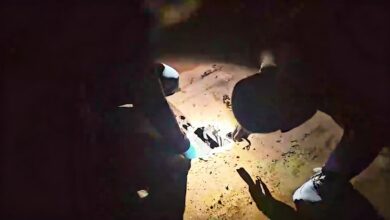
When the Semillas de la Memoria team, along with archaeologist Claudia González, began excavations, disappointment awaited them. Not a single bone, not a fragment of clothing—nothing was left. Over the years, the site had been used repeatedly as a waste dump and later cleaned up. Most likely, the remains were destroyed along with household rubbish, and none of the workers suspected that human bones were among the trash.
The mayor of Cubillos del Sil confirmed: the area where the grave once stood has indeed become a dump. The news came as a shock to the family. They had hoped to at least bury the remains with dignity, but now even that opportunity has disappeared. A sense of despair mingled with bitterness—because the memory of their ancestors was, quite literally, thrown away.
Despite this, the relatives didn’t give up. They decided that memory is more important than physical traces. Julia ordered a photograph to be placed on the family grave. Now, a new name will appear in the cemetery in Ponferrada, and the story will have a new chapter.
Memory and sorrow
This story is not just about one family’s tragedy. It’s a reminder of the thousands of nameless victims whose lives were erased from the country’s memory. Spain still grapples with the ghosts of its past, and investigations like this are a rare chance to restore forgotten faces and names.
Personally, I believe that indifference to such stories is a crime against our own history. When people’s remains are lost in the trash and their names are erased from memory, the country loses a part of itself. But as long as there are those willing to search, remember, and share these stories, there is hope that memory will survive.
The family of Julio and Leocadia couldn’t recover the remains, but they were able to reclaim the story. And perhaps that matters most. Because as long as we remember, no one is forgotten.