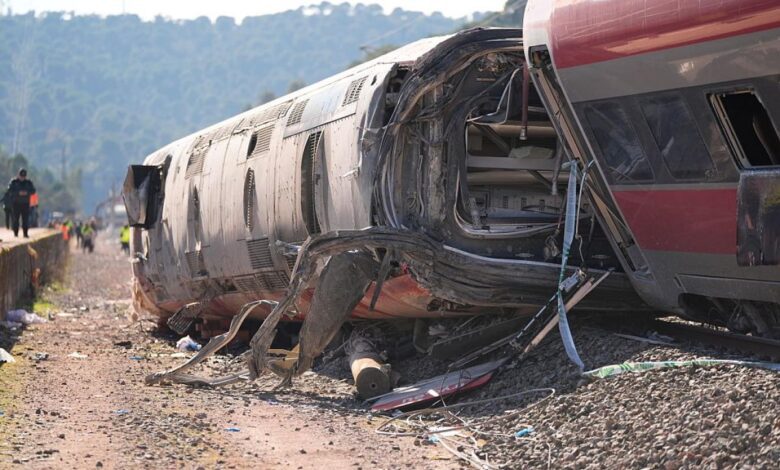
The evening of January 18, 2026, will forever be etched in Spain’s memory. A tragedy near Adamuz unfolded on the railway, shocking the entire nation. Two high-speed trains — Alvia and Iryo — collided with such force that the consequences are still being discussed at every level. Officials, including representatives from the government, Adif, and Renfe, have tried to reconstruct the events down to the second. Yet despite a detailed timeline, the cause of the disaster remains a mystery.
Emergency services arrived at the scene immediately after the accident. Authorities confirmed 43 fatalities and dozens injured to varying degrees. Officials are cautious not to jump to conclusions, stressing that premature statements could disrespect the victims. Nevertheless, the public demands answers, pushing railway companies to release details in an attempt to explain how such a tragedy could have occurred on one of the country’s most advanced lines.
Seconds of the disaster
According to Adif, the fatal moment came between 19:43:40 and 19:43:45. It was in this brief window that the trains made contact, resulting in heavy casualties. Just moments before, the Iryo train had already derailed, and Alvia was unable to brake in time. At that instant, a sudden voltage drop was recorded along the line — the supporting pylons and overhead contact network were severed.
The first emergency call came in at 19:45:02— the Iryo train driver reported a strange ‘drag’, unaware of the scale of the disaster. A minute later, another train following Iryo reported a loss of power. At 19:48, the central control room in Madrid (Atocha) tried to contact the Alvia driver, but there was no answer — he was killed in the collision. Only at 19:49 did they manage to reach an Alvia conductor, who reported a head injury and chaos in the carriage.
At the same time, the Iryo driver contacted the control room again, reporting a derailment and a small fire. He asked for all traffic to be stopped, not knowing that a collision had already occurred. At 19:50, emergency services received a distress signal, evacuation began, and emergency protocols were put in place.
Response after the crash
By 20:15, the driver of the train following Iryo, along with two passengers, set out on foot to inspect the damaged section. At the same time, it was decided to suspend all traffic on the line and return trains to their departure stations. A crisis committee was convened to take control of the situation.
In the following hours, rescuers, medical teams, and engineers worked at the scene. Authorities coordinated actions between regional and national agencies. Despite the rapid response, many are questioning why the tragedy could not be prevented if the safety system was considered one of the best in Europe.
Inspections and assurances
Special attention is being paid to the technical condition of the line. Adif representatives stated that the section underwent regular inspections. The last full inspection took place on January 7, 2026—just 11 days before the disaster. Inspectors checked the track geometry, the condition of the engines, track switches, and new devices installed in May 2025. Four inspections were carried out in the three months prior to the accident, which, according to officials, rules out negligence or technical malfunction.
Spain’s minister of transport, speaking in a trembling voice, insisted that the country’s rail network meets the strictest European standards. He urged the public not to panic and to trust the system, which he described as one of the most reliable in the world. However, after such a blow to its reputation, his words sound far from convincing.
Unanswered questions
Despite the detailed timeline, the key question—why two trains ended up on the same track at a critical moment—remains unresolved. Officials are avoiding speculation, citing the ongoing investigation. Meanwhile, the public is demanding transparency and concrete steps to prevent such tragedies in the future.
The situation surrounding the Adamuz disaster has become a litmus test for Spain’s entire transportation system. Each new revelation sparks a wave of emotion and debate. As the investigation continues, railway companies and authorities are forced to balance the need to keep the public informed with the fear of losing passengers’ trust.