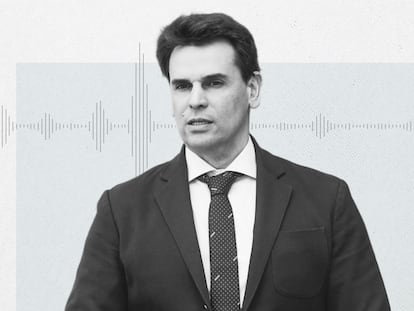
A landmark court ruling in a case involving fraud with European funds once again raises concerns about financial transparency in Spain. The verdict affects not only the individuals involved, but also the entire oversight system for spending money received from the European Union. For Spaniards, this serves as a warning: even small companies can find themselves at the center of major investigations if international fraud is involved.
At the center of the story is David Herrera Lobato, owner of a small company in Arahal (Seville), who was sentenced to three years in prison. He was found guilty of using fake documents to obtain funds earmarked for the European Union mission in Somalia. Investigators determined that he did not act alone—a technically skilled accomplice was involved, but that person’s identity remains unknown.
The fraud scheme
In December 2022, the perpetrators sent an email posing as the official supplier of medical equipment for the European mission in Somalia. The message requested a change in banking details for payment of equipment that had already been delivered. Attached were forged documents: one allegedly from a Spanish bank, the other from a Kenyan supplier.
As a result of the deception, the European mission transferred nearly 70,000 euros to an account managed by Herrera Lobato. Within three days, these funds were distributed across other accounts. The court noted that the defendant was unable to explain why the money ended up in his account or where it subsequently disappeared.
Connections and new accusations
This episode is not directly related to another high-profile case involving the partner of the head of the Madrid region. However, the investigation revealed that between 2021 and 2022, Herrera Lobato and his associates set up shell companies to issue large invoices to a consulting firm owned by an entrepreneur from the circle of a well-known politician.
According to the tax authorities, these companies had no employees and were registered at the home addresses of those involved in the scheme. A total of 13 invoices were issued for more than 170,000 euros, as well as two large bills from a supposed businessman from Mexico. All these documents were used to lower the taxable base.
Legal details
During the hearings, the defense tried to prove that the defendant had no malicious intent and suffers from health issues as well as addiction. However, the court rejected these arguments, pointing out the lack of evidence that drugs influenced his actions. Herrera Lobato himself claimed he does not personally know the other defendants and that all work was performed on order.
The judges emphasized that the defendant failed to provide any reasonable explanation for the origin of the money and its subsequent movements. As a result, a guilty verdict was delivered, which can still be appealed within ten days.
Context and consequences
This case became the first in Spain where a verdict on an investigation by the European Public Prosecutor’s Office was handed down by a national court. This body was established to protect the financial interests of the European Union and has already initiated several investigations involving Spanish companies and individuals.
In recent years, Spain has seen a rise in cases of fraud involving European funds. In 2025, a similar case was uncovered in Valencia involving fake invoices for the supply of medical equipment, while in Andalusia, an investigation was launched into fictitious services for educational programs. These developments demonstrate that monitoring of spending is becoming increasingly strict, and penalties—real.