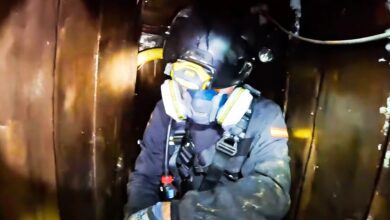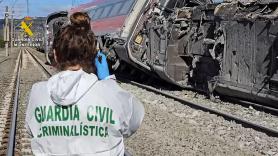
Four days have passed since the horrific train crash in Adamuz (Adamuz, Córdoba), yet investigators still cannot say clearly what exactly caused the collision between the two high-speed trains. Technical experts remain working at the scene, dismantling train cars and examining every inch of the tracks. However, neither the inspection of the rolling stock nor the infrastructure checks have shed light on the root cause—whether the malfunction occurred in the train itself, on the rails, or in a combination of both.
It all began when an Iryo train suddenly derailed. Just nine seconds later—far too little time for the braking systems to respond—a Renfe train traveling in the opposite direction crashed into it. The Minister of Transport admitted there was no time to react, and the technology was unable to prevent the tragedy. Those few seconds proved fatal for dozens of passengers.
Key evidence
Investigators have paid special attention to a massive metal part found several hundred meters from the center of the accident. It was partially submerged in a stream beneath the railway bridge. The head of the railway accident investigation commission called this element critically important, as it connects the train to the rails. It is still unclear which of the trains it belonged to, and whether its detachment was the cause or the result of the disaster.
A further puzzle was added by strange marks found on the wheels of several Iryo carriages and other trains that passed through this section after the crash. Officials urge caution, saying it is too early to directly link these marks to track defects. Experts are working to determine whether the traces appeared before the derailment or as a result of the accident itself.
Track inspections have only raised more questions. The section was repeatedly checked before the tragedy, but no significant irregularities were found. The transport minister insists human error is ruled out, while the technical cause remains unclear and extremely difficult to identify.
A test of strength for families
For several days now, families of the missing have been gathering at the Poniente Sur civic center in the heart of Córdoba. Here, across from the bullring, people wait for any news of their loved ones. Each day their numbers shrink: some leave, unable to bear the uncertainty; others depart, their worst fears confirmed. Silence, lowered heads, tears—the mood in the hall is heavy, and no one dares to ask unnecessary questions.
Some families still find the strength to speak. The relatives of Mario, who had just taken his exam in Madrid to become a prison officer, learned that he died on his 42nd birthday. On that day, he was traveling to Huelva on an Alvia train when the tragedy struck. Among the victims was Agustín, a dining car worker who had miraculously survived another train accident 13 years ago in Angrois (Santiago de Compostela). This time, fate showed no mercy.
After identifying the victims, families are told about the next steps. The victims’ belongings are transported to Montoro, where the local court is conducting the investigation. For many families, this day marked the end of a painful wait filled with uncertainty and official reports of rising death tolls. Psychologists and Red Cross medical staff provide round-the-clock support, helping people cope with the shock. More than 150 specialists worked with the families to ease their pain and give them strength to endure the tragedy.
A political divide
The disaster immediately became a catalyst for political and labor union battles. The SEMAF train drivers’ union announced a three-day nationwide strike, citing a series of recent accidents—in Adamuz, in Gelida (Barcelona), and another derailment in Catalonia. According to the union, these incidents marked a point of no return, and they now demand tough new safety measures for the railways. Additionally, SEMAF representatives are threatening criminal charges against those responsible for the infrastructure, insisting they had repeatedly warned about vulnerable sections of the network.
Authorities, for their part, are in no hurry to acknowledge any connection between these warnings and the Adamuz tragedy. The transport minister reiterated that human error was not a factor and the technical cause remains undetermined. He commented on the strike, saying he does not consider it the best solution but is open to dialogue with the unions.
Meanwhile, Adif has imposed new speed restrictions on several railway routes and launched unscheduled inspections after the recent storms. Officials describe these moves as preventive, but the investigation remains stalled as political and union tensions continue to rise. There are still no answers, while the families of the victims and injured await some measure of clarity.