The trial of the Pujol family has become one of the most talked-about events in Spain, touching not only on corruption but also the public’s trust in law enforcement. At the center of attention are the actions of former leaders of the National Police, who now have to account for their actions in court. Their testimonies could reshape perceptions of police work and raise new questions about the transparency of investigations in the country.
Mutual accusations
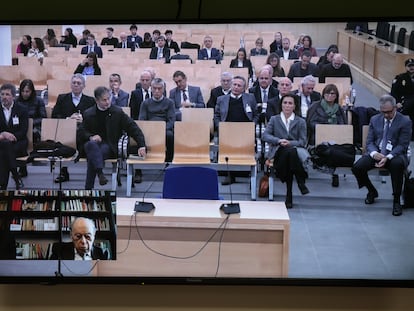
At the hearings in the National Court, four former senior police officials took the witness stand. Among them were former police operations director Eugenio Pino, retired commissioners José Manuel Villarejo and Marcelino Martín-Blas, as well as inspector Bonifacio Díez. All became embroiled in a debate over who tried to obtain compromising materials on former Catalonia leader Jordi Pujol and his family, and how.
During questioning, each of them tried to minimize their involvement in any potential illegal actions. Pino claimed he had nothing to do with gathering information on the Pujol family’s accounts in Andorra, insisting the data reached him through a subordinate who did not reveal their source. Martín-Blas, on the other hand, maintained that Pino himself initiated contact with possible informants, while he merely handed over the received documents to his superior. Villarejo chose to refuse to answer, citing his status as a suspect in Andorra, but the judge reminded him of his obligation to tell the truth.
Hidden Motives
The defense team representing the Pujol family insists that the entire case was originally built on unlawful police actions aimed at discrediting Catalan politicians and derailing the independence movement. The lawyers argue that the evidence was obtained in violation of procedures and that the entire process should be declared void. They cite instances such as attempts to pressure Banca Privada d’Andorra (BPA) and an effort to insert a flash drive with illegally acquired banking data into the case file—a move for which Pino has already received a one-year prison sentence.
However, despite the defense’s expectations, none of the former police officers shared new information. Their testimonies amounted to mutual accusations and attempts to evade responsibility. Villarejo even claimed to feel pressure from the court, responding with irony and a reluctance to discuss details related to Andorra.
Courtroom Intrigue
The trial in the Pujol case has repeatedly become the scene of unexpected twists. For instance, earlier during the hearings, there was a curious incident when a wrongly summoned witness publicly demanded to prove her non-involvement, surprising everyone present. This was covered in detail in the report about the unexpected turn in the Pujol case proceedings.
This time, all eyes are on how former police chiefs are trying to distance themselves from the scandalous episodes. Each claims not to have been directly involved in operations against the Pujol family, insisting they only learned about events through conversations or rumors. At the same time, they do not hesitate to accuse one another of seeking recognition for leaking compromising materials to the media.
Context and consequences
According to El Pais, the hearings were initiated by the defense attorneys, who hope to prove that the investigation was biased from the outset. They argue that the police actions aimed less at combating corruption and more at exerting political pressure during the peak of the Catalan crisis. The court must now assess to what extent these arguments could affect the final verdict.
In recent years, Spain has witnessed several high-profile trials with not only politicians but also law enforcement officials appearing in court. Such cases spark significant public debate and often prompt discussions about judicial reform. It is worth recalling that in other regions of the country, investigations against senior officials have also been accompanied by allegations of misconduct by the investigators. These events highlight the pressing issues of public trust in institutions of power and the transparency of their operations.