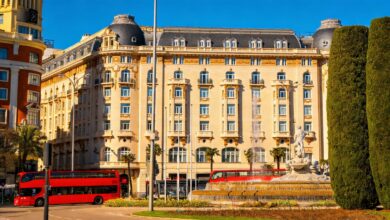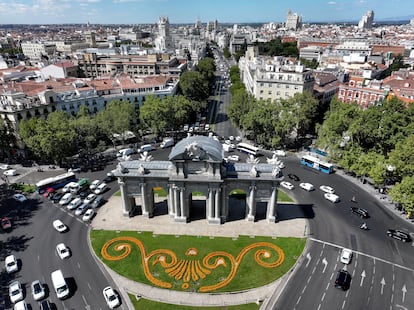
One of the most prominent urban redevelopments in recent years has begun in the heart of Madrid. The closure of two lanes on Alcalá Street between two major landmarks—Puerta de Alcalá and the Cibeles Fountain—has already sparked lively debate among locals and experts. This move directly impacts the daily routes of thousands of drivers and pedestrians, while also changing perceptions of the capital’s historic center.
City officials explain that these temporary inconveniences are necessary to create a new public space. The project includes expanding sidewalks, adding a central boulevard, and building a dedicated bike lane. All these changes aim to make the area more enjoyable for walking and relaxation, while restoring the historic atmosphere that the street has lost over recent decades.
Work plan
According to the plan, the section between Alcalá and Cibeles will retain two car lanes and a separate bus lane in each direction. The central part of the street will be transformed into a spacious pedestrian promenade, while a separated bike path will be added to the south side. Special attention will be given to the north side, where the sidewalk will be significantly widened to accommodate the traditionally higher pedestrian flow in this area.
As part of the greening effort, 57 new trees will be planted to restore the historic double alley that adorned this area in the 19th century. New shrubs and floral arrangements will appear on sidewalks and in the central part, expected to transform the street’s atmosphere and make it more attractive to locals and tourists.
Changes for transportation
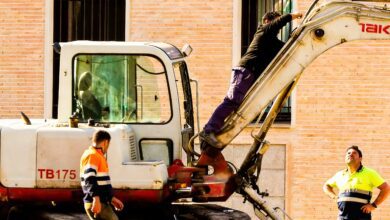
The temporary reduction in traffic lanes has caused concern among drivers, but city services assure that the main work is scheduled for the summer months, when traffic traditionally decreases. This will help minimize congestion and discomfort for residents. In addition, the project includes resurfacing the road, replacing asphalt and granite paving, as well as installing new streetlights with energy-efficient LED bulbs that match the area’s historic look.
An important part of the transformation will be updating and expanding street furniture, as well as reorganizing urban café areas. These improvements aim to make public spaces more comfortable for leisure and gatherings, boosting the area’s appeal for business.
Pedestrians and accessibility
Particular attention is being paid to accessibility: new routes to public transport stops and pedestrian crossings will be brought in line with modern standards. A new pedestrian crossing will appear on the west side of the square, while the existing one in the east will be upgraded. A dedicated bike route will be created to connect Calle de Alcalá with the bike lane on Calle Serrano, providing convenient access to Retiro Park.
The project will also update the lighting around Puerta de Alcalá. A study will be carried out to improve the monument’s illumination and reposition the light fixtures, highlighting the architectural details and making the monument stand out in the evening.
Neighborhood changes
The changes will affect more than just the central section. On Calle Alfonso XI, the western sidewalk will be widened and the parking scheme revised to allow for the planting of six more trees. The entrance to Calle Pedro Muñoz Seca will be modified to match the new layout of Alcalá. All these measures aim to make the area greener, more comfortable, and modern—while preserving its historic charm.
Overall, the project promises not only to enhance the appearance and functionality of one of Madrid’s main streets, but also to create new opportunities for leisure, walking, and social gatherings. City officials emphasize that such transformations are essential to maintain Madrid’s status as a modern European metropolis, where residents’ comfort and the preservation of historical heritage go hand in hand.
In recent years, Madrid has been actively investing in the renewal of public spaces. Large-scale projects have already been implemented on Gran Vía and in the Plaza de España area, where sidewalks were widened, new trees were planted, and new recreation areas were created. These changes have significantly improved the quality of the urban environment and have served as an example for other Spanish cities. More initiatives of this kind are expected in the coming years, all aimed at developing a sustainable and comfortable urban infrastructure.