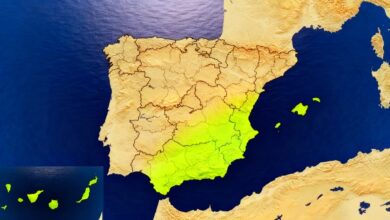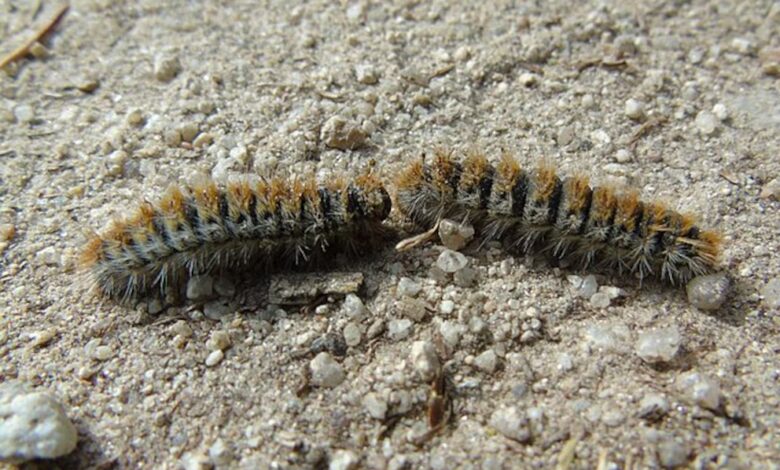
In recent years, Spain has faced a serious threat to its pine forests—massive outbreaks of the Thaumetopoea pityocampa caterpillar, known as the pine processionary. This problem goes beyond ecological concerns: the pest causes economic damage, and its toxic hairs trigger severe allergic reactions in people and pets. A new study by Spanish scientists has revealed an unexpected natural mechanism that could change the situation.
According to RUSSPAIN, specialists from the Estación Biológica de Doñana (EBD-CSIC) and the University of Huelva have, for the first time, recorded that predators such as the zorro rojo and the garduña actively prey on adult female processionaries. Analysis of samples collected in the Sierra de Cazorla, Sierra Nevada, and Aracena natural parks showed that the feces of these animals contained hundreds of pest eggs and protective scales used by females to camouflage their egg clutches. This indicates that the predators specifically target adult moths, not just larvae.
Impact on pest population
Of particular interest is the finding that female processionaries often travel on the ground after mating to lay their eggs. At this time, they become easy prey for ground-dwelling predators. Researchers note that each destroyed adult female means about 200 fewer caterpillars, which could significantly reduce pest numbers in the following season. Some zorro samples contained up to 1,700 eggs, and garduñas up to 700, showing the scale of this phenomenon.
At the same time, analysis of the droppings of other predators, such as gineta and the European badger (tejón europeo), did not reveal any traces of adult processionary consumption. However, researchers do not rule out that these species may also contribute to pest population control, but their involvement has not yet been recorded.
Ecosystem effects
The study’s findings highlight the importance of preserving complex ecosystems where multiple predator species are present. Their role goes beyond traditional expectations: they not only manage populations of small animals but also influence the dynamics of pests capable of devastating entire forests. As conventional methods to combat the processionary are not always effective or environmentally friendly, supporting populations of predatory mammals could become part of a comprehensive forest protection strategy.
Integrating these natural enemies into biological control programs is especially relevant in regions where pest numbers reach critical levels. According to the researchers, the presence of zorros and martens can significantly reduce the risk of epidemics in pine forests, helping maintain forest health and lower chemical treatment costs.
New approaches to forest protection
Spanish forests have been suffering from processionary caterpillar infestations for several years, and each season brings new challenges. In recent years, alternative methods for controlling this pest have been discussed in the country, ranging from pheromone traps to the introduction of biological agents. However, supporting and restoring populations of local predators may prove to be the most sustainable and safest solution for the ecosystem.
Other regions in Europe have also recorded cases where predatory mammals affected forest pest populations, but such large-scale involvement of foxes and martens has been observed in Spain for the first time. Analysis by russpain.com suggests that similar natural pest control mechanisms could be underestimated in other Mediterranean countries as well.
In recent years, Spain and neighboring countries have experienced outbreaks of other forest pests, such as the mass multiplication of bark beetles in Portugal and France. In these cases, the use of natural enemies to contain populations was also considered. Experience shows: the richer and more diverse the ecosystem, the greater its resilience to pest invasions. It is important to consider this factor when developing new forest protection strategies and biodiversity conservation.