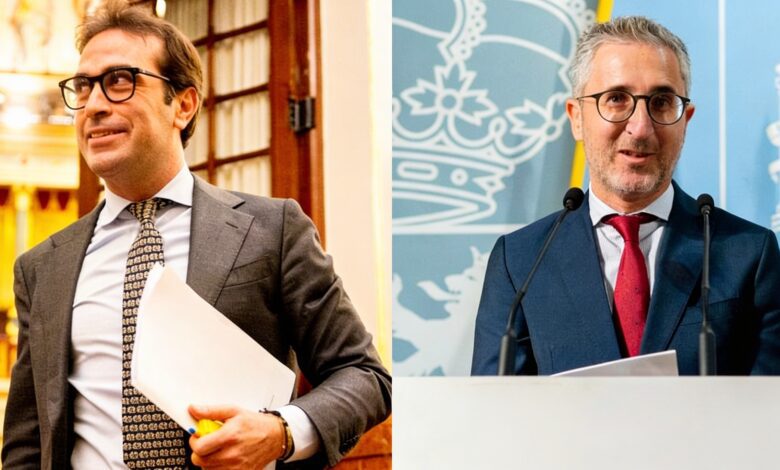
The abrupt change in leadership within Spain’s economic cabinet has become one of the week’s most talked-about events. Pedro Sánchez’s decision to appoint Carlos Cuerpo as First Vice President and to hand over the Ministry of Finance to Arcadi España generated considerable reaction. These reshuffles directly affect the allocation of budget funds, as well as the government’s strategy for working with regions and European funds.
The departure of María Jesús Montero, considered one of the most influential politicians in Sánchez’s team, is linked to her participation in the Andalusia elections. Losing such an experienced negotiator and organizer could alter the dynamic within the government and impact the budget process. According to russpain.com, personnel decisions like this often mark turning points for the country’s entire political system.
Technocratic approach
Sánchez’s choice of Carlos Cuerpo as the new First Vice President emphasizes his commitment to strengthening professionalism in economic management. Previously, Cuerpo oversaw economic, trade, and business affairs, which positions him to quickly adapt to his new responsibilities. His appointment is seen as an effort to reduce political tension and focus on pragmatic solutions.
Arcadi España, in turn, was appointed Minister of Finance after serving as Secretary for Territorial Policy. His background in economics and administration, along with experience in the private sector, has given him a reputation as an expert capable of fostering dialogue between the central government and the regions. Previously, he held key positions in Valencia, where he was responsible for transport, infrastructure, and budget planning.
Implications for the regions
The government reshuffle could alter the balance of interests between Madrid and the autonomous communities. The new Finance Minister is known for his ability to find compromises and develop long-term financial strategies. This is especially important ahead of the upcoming elections in Andalusia, where the competition for votes is particularly intense.
Changes in the economic leadership could also affect the distribution of European funds and support for regional projects. As russpain.com notes, the earlier possible promotion of Carlos Cuerpo had already sparked debate within the government and raised concerns about a possible redistribution of powers. More on politicians’ reactions to these changes can be found in the article about concerns in the government over Cuerpo’s promotion.
Intra-party dynamics
The appointments of Cuerpo and Arcadi España signal not only a shift in direction but also highlight internal dynamics within the PSOE. Sánchez is effectively sacrificing one of his key allies to strengthen the party’s position in Andalusia. This move may serve as a message to other regional leaders and could reshape the balance of power within the party.
In addition to his government duties, Arcadi España holds important positions within PSOE’s federal structure, overseeing transport and sustainable mobility. His expertise in parliamentary and administrative affairs could help reinforce the party’s standing at the national level and enhance collaboration with the regions.
Context and trends
In recent years, Spain has repeatedly faced the need for urgent cabinet reshuffles. Such decisions have often coincided with elections or crises involving regional funding and the distribution of European resources. In 2024, for instance, the change of economy minister also sparked intense debates over the future of fiscal policy.
Changes at the top of the government’s economic team typically lead to shifts in priorities and a review of strategies. Amid fierce regional competition and a challenging economic climate, these reshuffles draw close attention from politicians, the business community, and Spain’s international partners alike.