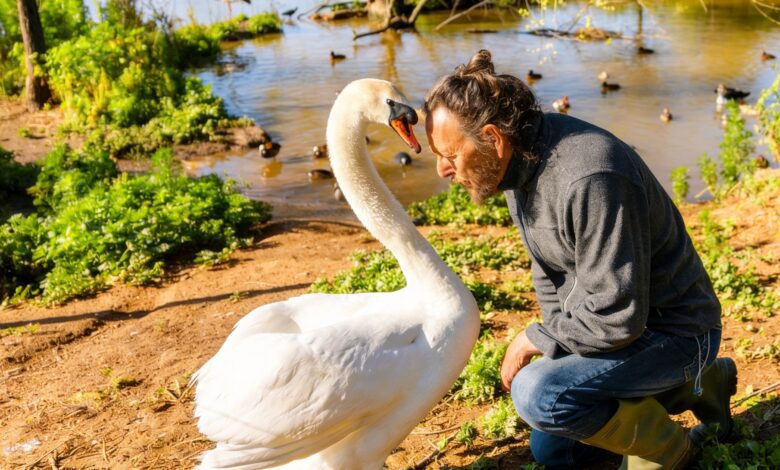
The situation surrounding La Cañada de los Pájaros has become a cause for concern across Spain. This private reserve, located near the Doñana National Park, has long served as a haven for rare and endangered bird species. Now its existence is at risk, threatening the loss of a unique center for biodiversity conservation and an educational resource for future generations.
The crisis stems not only from financial difficulties but also from a lack of support from government agencies. Although La Cañada de los Pájaros was the first reserve in the country to receive a special protected status, authorities have gradually abandoned their commitments to joint programs. According to El Pais, the center’s annual maintenance costs exceed 120,000 euros, and income from tours and restaurant rentals covers less than half of this amount.
History and significance
The reserve was established in the late 1980s by biologists Placido Rodriguez and Maribel Adrian. They transformed a former quarry and landfill into a true oasis for more than 180 species of birds, including endangered species such as focha cornuda and cerceta pardilla. The center became not only a sanctuary for wildlife, but also a venue for scientific research, educational programs, and student internships.
In 1991, a special legal status—’protected natural area’—was created for La Cañada de los Pájaros, enabling private owners and the state to unite their efforts. However, over time, most similar projects came under municipal control, while La Cañada was left with almost no external support. As El Pais notes, the lack of successors among the founders’ children and the appearance of new neighbors altering the area’s hydrology have further complicated the situation.
Financial and administrative challenges
Currently, the center relies solely on the enthusiasm and personal funds of its founders, as well as volunteer support. However, the owners’ age and the absence of new staff raise concerns about the reserve’s future. According to russpain.com, other private nature areas in Spain, such as Puerto Moral in Huelva, have faced similar problems, with land ultimately being transferred to the state after decades of operation due to a lack of resources and staff.
The Savia Foundation, which works to protect the rural environment, has analyzed the situation and concluded that the market value of the land does not reflect the true worth of the reserve. Selling the site would not recover the investments made and could lead to the disappearance of this unique natural asset. As an alternative, the creation of a fund involving public and private entities—as well as universities and research centers already using La Cañada de los Pájaros for training and scientific purposes—is proposed.
Impact on biodiversity
La Cañada de los Pájaros plays a key role in preserving rare bird species, especially during drought periods when much of the cerceta pardilla population in Spain gathers here. The reserve’s wetlands serve as the last refuge for many species, while the range of ecosystems—from lagoon to Mediterranean forest—helps sustain high biodiversity.
In recent years, there has been growing attention to the challenges facing private natural areas in Spain. For example, the fate of cultural projects and nature parks in Andalucía has recently been discussed, with a lack of funding and support leading to the closure of unique sites. Similar challenges have affected other initiatives, as highlighted in coverage of the Suzanne Vega concert in Barcelona, which also emphasized the importance of protecting cultural and natural spaces (read more about the significance of such events for the region).
The fate of La Cañada de los Pájaros could set an example for other private environmental initiatives. Without a sustainable solution, Spain risks losing not only rare species but also important educational and scientific sites. The future of such centers remains uncertain, and their disappearance could have irreversible consequences for the country’s ecosystem.
In recent years, Spain has seen an increase in the closure of privately owned natural areas due to a lack of funding and staff. In Andalusia and Castilla y León, several such projects have been forced to shut down, despite making significant contributions to the preservation of rare species. At the same time, government support programs often do not cover private initiatives, leading to the loss of unique ecosystems. Experts note that new forms of cooperation between the government, private landowners, and the scientific community are essential to maintain biodiversity. Only through such collaboration can the disappearance of valuable natural sites be prevented and their sustainable development ensured.