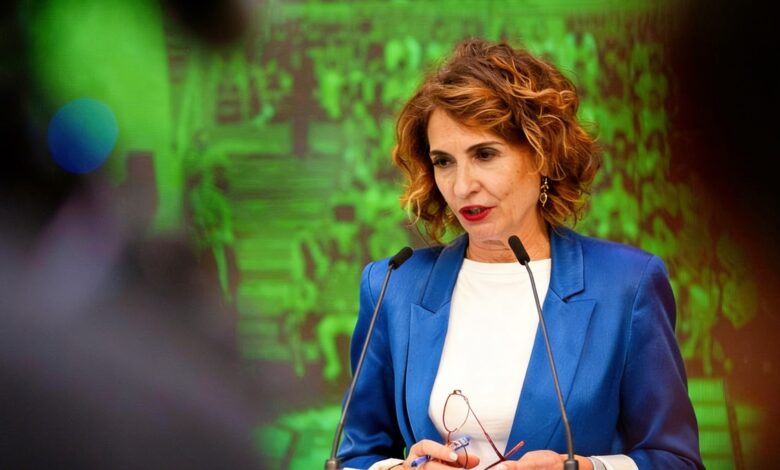
Spain is set for a major political development in the coming days as the government prepares to replace one of its key ministers. The move comes as María Jesús Montero, who served as First Deputy Prime Minister and Minister of Finance, is leaving for Andalucía to participate in regional elections. This change could alter the balance of power in the government and impact the country’s economic strategy, given that she was responsible for Spain’s budget and financial stability.
According to russpain.com, President Pedro Sánchez plans to make only minimal changes to his cabinet. This approach reflects a desire to keep the government’s work stable and predictable in the final year of the current legislature. The main questions center on the distribution of duties at the Ministry of Finance and the appointment of the new First Deputy Prime Minister. Within the government, there is discussion of temporarily assigning financial responsibilities to the current Minister of Economy, Carlos Cuerpo. This measure would combine two crucial areas—economy and finance—under a single leader, a structure that has been used in Spain’s history, though not with the present cabinet.
Who might take the position
In recent weeks, Carlos Cuerpo has been actively involved in developing and coordinating anti-crisis measures related to the consequences of the Middle East conflict. His candidacy is seen as a compromise, as he is not a member of PSOE but has already proven himself as an effective negotiator. Government officials note that successful financial management requires not only professionalism but also the full confidence of the president. In addition, the new minister must be able to work with representatives of the coalition partner, Sumar, with whom Cuerpo has previously disagreed on issues such as reducing working hours and employee schedule control.
The question of who will become the first deputy prime minister remains open. Traditionally, this position has been held by women, except for the period when Pablo Iglesias occupied it. Unofficially, government insiders acknowledge that Félix Bolaños has long acted as Pedro Sánchez’s de facto deputy, even though his official title does not reflect this status. Among the ministers who have remained in the cabinet since 2018, Margarita Robles, Luis Planas, and Fernando Grande-Marlaska stand out. Each plays a key role: Robles oversees defense during the instability in the Middle East, Planas maintains stability in the agricultural sector and is seeking the top post at FAO, while Marlaska enjoys the personal trust of the president.
Consequences for the government
The official announcement of the replacement of the Minister of Finance and First Deputy Prime Minister is expected at the end of the week. María Jesús Montero has already bid farewell to her colleagues at the last Council of Ministers meeting and is preparing to address Congress. She will keep her seat as an MP to retain her status as a civil servant in Andalucía, where she has not worked for over two decades. Minimizing changes in the government will help maintain the balance of interests among various political forces and avoid new conflicts within the coalition.
In the context of these reshuffles, it should be noted that Spain has recently faced significant personnel decisions affecting the work of state institutions. For example, the recent recognition of the private university ANECA was a notable event for the country’s educational system, as discussed in the article on new standards for universities. Such changes demonstrate that even targeted appointments can alter the rules of the game in key sectors.
Context and related events
In recent years, Spain has repeatedly faced the need for urgent government reshuffles amid elections or foreign policy challenges. For example, in 2024, the Minister of Economy was replaced after Nadia Calviño left for the European Investment Bank, which resulted in only minimal changes to the cabinet. In 2025, a similar situation occurred in the Ministry of Health, when the outgoing minister was replaced without bringing in new faces. Such decisions allow the government to maintain stability and avoid prolonged political crises, which is especially important amid internal and external challenges. This targeted reshuffling has become a hallmark of recent years, reflecting a drive for manageability and predictability in the work of state institutions.