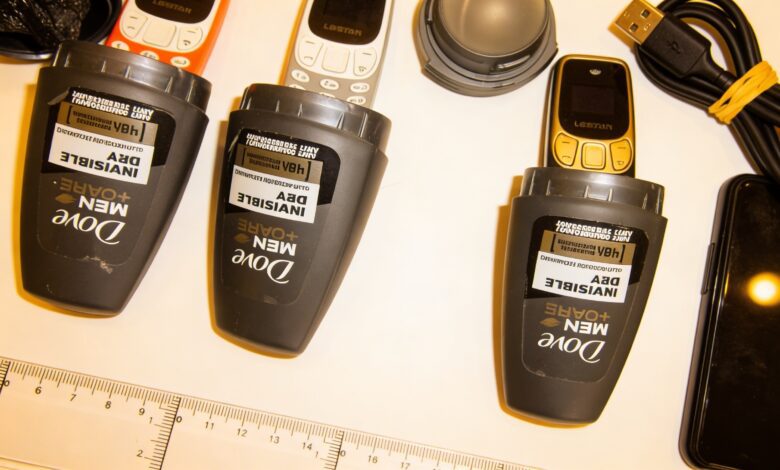
In recent years, Andalusian prisons have come under the spotlight due to a sharp increase in confiscated mobile phones. This trend directly affects institutional security and staff operations, pushing officials to seek new ways to combat the illegal circulation of devices. According to El Pais, over the past five years more than 13,000 mobile devices have been seized in Spanish prisons, with nearly one-fifth found in three Andalusian institutions.
Leaders in confiscations
Prisons in Almeria, Malaga, and Albolote lead in the number of mobile phones confiscated among all Spanish correctional facilities. Almeria recorded 756 cases, Malaga 728, and Albolote 647. These figures significantly exceed those of other regions, including Madrid’s Valdemoro and Estremera prisons, where 646 and 567 devices respectively were seized. Meanwhile, some institutions, such as Alcalá de Guadaira (Seville) and those on Menorca, reported no confiscations during this period.
According to El Pais, in 2025 alone, 2,466 mobile phones were confiscated in Spanish prisons, averaging nearly seven devices per day. In seven institutions, over one hundred phones were seized in a year, with Almeria again leading at 166 cases. It is followed by Alicante (152), Cordoba (148), Malaga (150), Estremera (128), Albolote (116), and Asturias (115).
Causes and consequences
Mobile phones in prisons are not just contraband—they are a source of serious problems. Their presence fuels illegal schemes, blackmail, and conflicts among inmates. According to El Pais, most confiscated devices are miniature models that are easy to hide in shoes or even inside the body. Such phones can be bought online for just over 20 euros. However, the number of smartphones with internet access is also rising, making them especially valuable among inmates.
The main ways phones enter prisons are through relatives during visits or after inmates return from short-term leaves. Sometimes devices are hidden in personal belongings or even inside toothpaste tubes. Lately, there has been a surge in cases of phones being delivered by drones, making the job of prison staff much harder and allowing newer gadgets to get in.
Countermeasures and challenges
Prison staff are forced to conduct regular searches, inspections, and checks to detect contraband devices. However, as El Pais notes, staffing levels and technical resources often fall short of the scale of the problem. Despite these efforts, thousands of phones end up in inmates’ hands every year, undermining communication controls and enabling criminal activity from inside.
Since 2008, several Spanish prisons have installed signal jammers to block mobile device signals. However, these systems have become outdated and are ineffective against modern data transmission technologies. As a result, inmates keep finding ways to bypass restrictions, while staff face new challenges.
Sanctions and training
Finding a mobile phone with an inmate is considered a serious violation and leads to disciplinary measures — from restricting outdoor time to transferring the inmate to another block. Such incidents are recorded in the inmate’s file and may affect eligibility for leave or other privileges. Prison staff undergo specialized courses on detecting prohibited items, with particular emphasis on new methods of smuggling in devices.
In recent years, Spain has repeatedly seen cases where high-profile criminals used mobile phones to coordinate actions outside prison. This has led to tighter controls and the introduction of new technologies, but the problem persists. Other European countries also report a rise in attempts to deliver mobile devices into prisons using drones and other innovative methods. Security and communication control in correctional facilities remain some of the most pressing issues for experts and authorities.