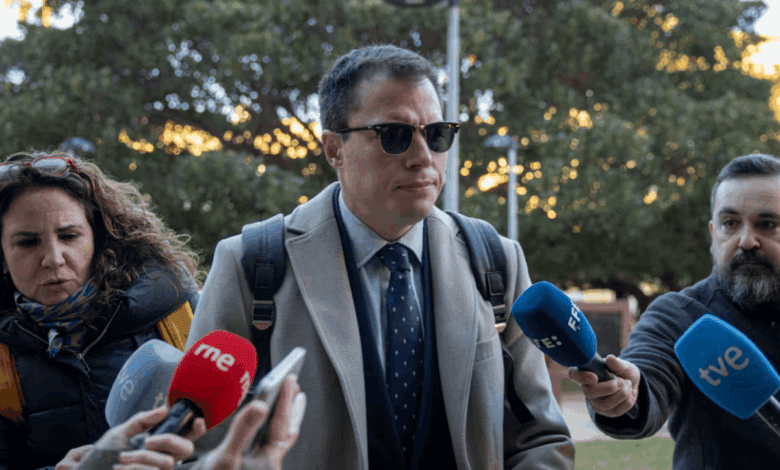
A real-life drama unfolded in the courtroom of Catarroja: a former high-ranking official of the Valencian government unexpectedly revealed details about the tense hours during the 2024 disaster. While a devastating disaster shook the region, claiming 230 lives, panic reigned in the corridors of power. According to former regional government secretary Cayetano García, it was at that crucial moment that he received a call that could have changed the course of events.
That evening, as the storm raged through Valencia’s streets and people struggled to escape the floods, García heard alarming news from the former head of the Department of Justice and Interior, Salomé Pradas: there was a real risk the dam could break. According to him, her voice was filled with uncertainty and fear. Pradas insisted on immediately imposing a lockdown throughout the province. García says decisions were being made on the fly, with information coming in piecemeal.
Critical moments
The situation was further complicated by the fact that President Carlos Mazón had just emerged from 37 minutes of complete inaccessibility. During that period, authorities were discussing the risk of a catastrophic failure of the Forata dam in Yátova. According to experts, if the dam had not held, the death toll could have reached eight thousand. Officials faced a choice: isolate the province immediately or wait for confirmation of the threat.
Testifying in court, Garcia emphasized that his statements were backed by notarized messages he exchanged with other government members that day. He admitted he was unfamiliar with the work of the crisis team and unaware of the Es Alert mass notification system, which was only activated half an hour after his conversation with Pradas. By then, most of the missing persons had already died.
Internal disagreements
There was confusion within the government. Garcia reported that after the call from Pradas, he contacted the government’s lawyer to find out whether imposing isolation was legally possible. However, neither the president nor his chief of staff were informed about this measure. The authorities acted in a disjointed manner, making decisions under pressure and with limited information.
Interestingly, despite his proximity to the leadership, Garcia told the court he did not consider himself part of the government’s “core.” He was summoned for questioning along with other key figures who coordinated actions with the president that day. Details emerged revealing that Mazón was dining with a journalist when the disaster struck, and he was out of contact for nearly 40 minutes.
Lost time
Reflecting on the events, García admitted that his reports on the scale of the disaster were not based on information from Pradas, but on news he had heard on the radio. He was unfamiliar with the warning system and unaware of the structure of the crisis task force. Authorities sent out a mass alert to residents only a significant time after the catastrophe began, when it was already too late for many.
According to observers, this entire chain of events points to serious issues in how the government manages emergencies. Questions remain unanswered as to why key decisions were delayed and why information failed to reach those who needed it. The trial is ongoing, and new details may shed light on what happened behind closed doors during those fateful hours.