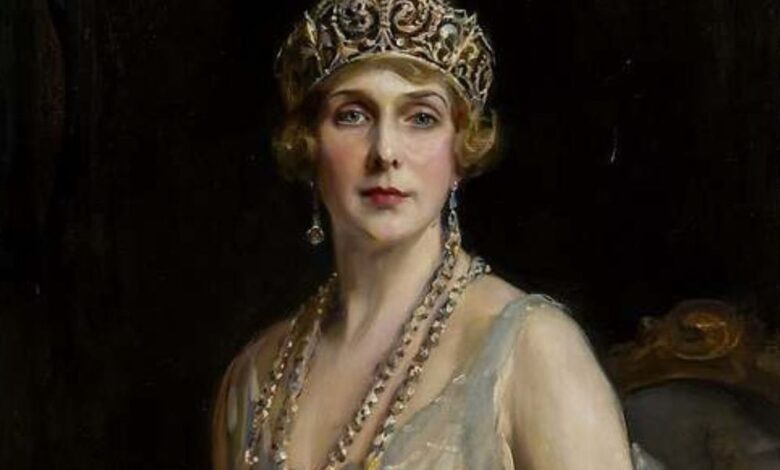
An unusual exhibition has opened at the Galería de las Colecciones Reales in Madrid, dedicated to Victoria Eugenie of Battenberg—a woman whose fate became closely intertwined with the transformations of the Spanish monarchy. A former British princess who arrived in Spain at the beginning of the 20th century, she became not only the wife of Alfonso XIII but also a symbol of a new era for the country. Her life was filled with challenges, but it was thanks to her that modern traditions and social initiatives appeared in the royal household.
The exhibition, open to the public from December 3, features more than 350 items: from personal letters and photographs to jewelry and documents. Visitors can trace Victoria Eugenie’s journey from her childhood in Britain to her final years in exile, and discover how her personal tragedies and social involvement shaped the image of the Spanish crown.
From British Princess to Spanish Queen
Victoria Eugenie was born in 1887 to Prince Henry of Battenberg and Princess Beatrice, daughter of Queen Victoria. She spent her childhood amid strict traditions and the splendor of the British aristocracy. In 1905, during Alfonso XIII’s visit to London, the young couple began a relationship that soon led to an engagement. For the sake of marrying the Spanish monarch, Victoria Eugenie converted to Catholicism—an important step for the future queen.
The wedding, held on May 31, 1906, was overshadowed by tragedy: anarchist Mateo Morral threw a bomb at the royal procession, killing 25 people and injuring more than a hundred. Despite this shocking incident, Victoria Eugenia quickly adapted to life at the Spanish court, blending European openness with respect for local customs.
Trials and changes within the royal family
Victoria Eugenia and Alfonso XIII had seven children together. However, their family happiness was marred by a hereditary disease—hemophilia—which the queen passed on to two of their sons. This not only complicated the couple’s personal lives but also became a subject of public and political debate. Over time, the relationship between the spouses grew strained, and the king’s extramarital affairs and the birth of illegitimate children only added to the tension.
Despite personal difficulties, Victoria Eugenia remained actively involved in public life. She initiated reforms to court protocol and focused on issues of hygiene and medical care. The queen supported the work of the Red Cross, organized efforts against tuberculosis, founded a nursing school, and oversaw hospital operations during the war in Morocco (Rif).
Life in exile and the return of her legacy
After the proclamation of the Second Republic in 1931, Victoria Eugenie left Spain. She lived in France, Italy, and Switzerland, returning to her homeland only once—in 1968, to attend the christening of her great-grandson, the future King Felipe VI. The queen passed away in Lausanne in 1969, and sixteen years later her remains were transferred to El Escorial, where Spanish monarchs are laid to rest.
Today, the exhibition in Madrid offers a new perspective on the life of Victoria Eugenie. The display features not only official portraits and gowns, but also personal letters, family photographs, household items, and medical instruments. Special attention is given to her contribution to social welfare and healthcare, as well as her influence on shaping the modern image of the Spanish queen.
What awaits visitors at the exhibition
Visitors to the Royal Collections Gallery will find rare documents, jewelry, dresses, and even medical equipment used by the queen. The exhibition provides detailed insight into Victoria Eugenie’s childhood, her first experiences in Spain, the tragedy on her wedding day, and her complex relationship with Alfonso XIII. A separate section is devoted to her public work: fighting epidemics, healthcare reforms, and support for charitable organizations.
Personal letters and family heirlooms reveal the character of Victoria Eugenia—reserved, disciplined, yet open to change. The exhibition will run until April 5, 2026, in a building next to the Royal Palace. Admission is 8 euros, with discounts available for youth and seniors. This is a rare opportunity to connect with history and learn more about the woman who changed perceptions of the queen’s role in Spain.