Spain faces yet another political scandal that could affect perceptions of government transparency and the work of law enforcement. Questions about who passed on sensitive information and why have once again taken center stage in public debate. The aftermath of this case may impact not only those directly involved but the entire country’s political system.
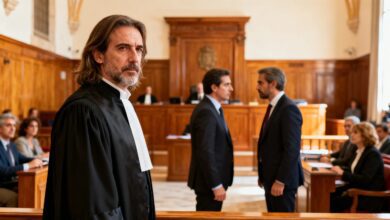
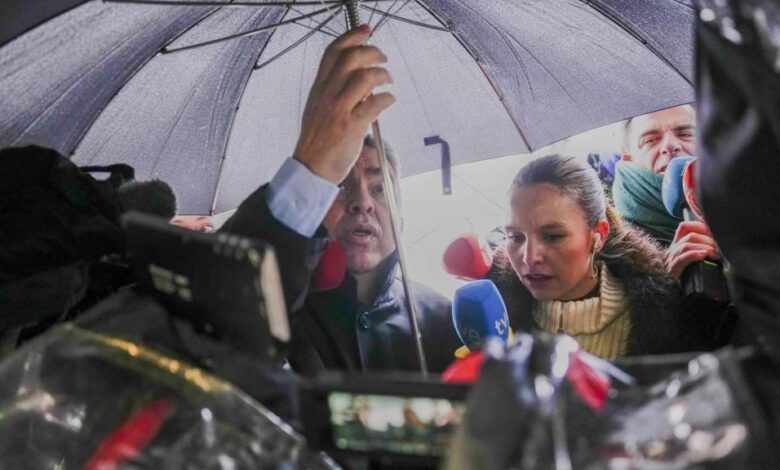
Former organizational secretary of the Socialist party (PSOE) Santos Cerdán testified in court in a case related to actions by Leire Díez, known within the party as the ‘fontanero.’ Judge Arturo Zamarriego is investigating how Díez sought to obtain compromising information on the Anti-Corruption Prosecutor’s Office and the Central Operational Unit of the Civil Guard (UCO), allegedly in an attempt to hinder their investigations.
A meeting without notification
In April 2024, Díez met with Cerdán at the PSOE headquarters on Ferraz Street. According to Cerdán, he did not inform then Prime Minister Pedro Sánchez about the meeting because Sánchez was in his ‘five-day period of reflection’ after the launch of an investigation involving his wife, Begoña Gómez. This window of time became crucial in the unfolding of events.
At the meeting, Díez handed Serdán a number of documents, among them an audio file recorded in 2014 by former commissioner José Manuel Villarejo. The recording features a conversation with Francisco Martínez, who at the time served as the Secretary of State for Security from the Partido Popular (PP). In the audio, Villarejo asserts that Sabiniano Gómez, Sánchez’s father-in-law, owned a sauna that allegedly offered intimate services. Villarejo calls this fact “politically lethal.”
Díez’s role and Serdán’s position
In court, Serdán insisted that he had never given Díez any instructions, despite her presenting herself as his “right hand” at other meetings. This detail became a particular focus of the investigation, as it was through Díez that the party received information potentially damaging to top officials’ reputations.
Since the start of the year, when the investigation into Sánchez’s wife began, the PSOE has been actively trying to link reports about Sánchez’s father-in-law’s saunas to an alleged police plot against the president and his family. As evidence, the party submitted to the National Court the very audio in which Villarejo refers to the saunas. However, the media published sections that the party omitted from the documentation—these mention that Sánchez met with members of the so-called “patriotic police” after his father-in-law had lunch with the same group.
Doubts and new developments
The judge in the Villarejo case dismissed the conspiracy theory but confirmed links between Enrique García Castaño—another member of the police group—and the prime minister’s father-in-law. These details added even more questions to an already complex picture.
During Serdán’s interrogation it was revealed that the transfer of documents and audio recordings took place at a time when the Sánchez family was under particular scrutiny. Serdán himself emphasized that he did not inform Sánchez about the meeting because Sánchez was unavailable due to personal reasons. This fact became key in understanding why the information did not reach the country’s top leadership in a timely manner.
Context and consequences
The story of the Villarejo audio and attempts to link it to a political conspiracy is not unique in recent Spanish politics. There have been instances where the publication of compromising materials led to resignations and investigations being revisited. For example, in 2023, a leak of recordings related to a corruption case in an autonomous region triggered a wave of public distrust in law enforcement. Such episodes highlight how acute the issues of transparency and trust in authority remain in Spain, as well as the importance of timely informing leadership about potentially dangerous situations.