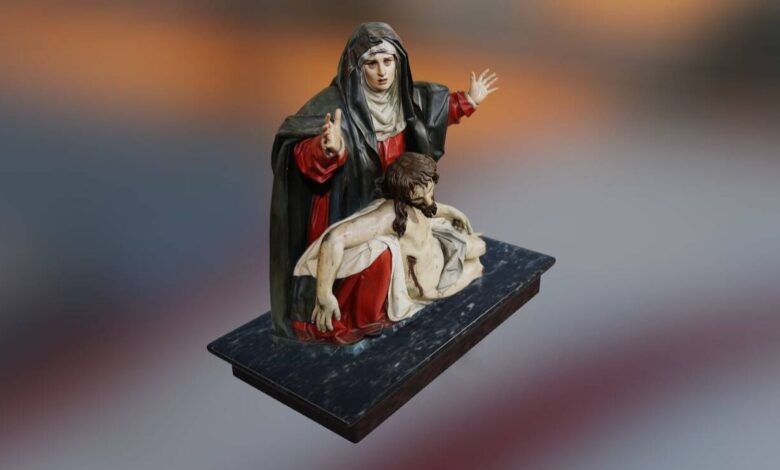
Spanish cities, where religious traditions have shaped cultural life for centuries, are now becoming hubs for technological innovation. In Valladolid, a new project has been launched that could revolutionize the preservation and promotion of national heritage. For the first time, the public is being granted access to virtual replicas of the famous Easter sculptures, created using cutting-edge technology from the video game industry and artificial intelligence.
New horizons for art
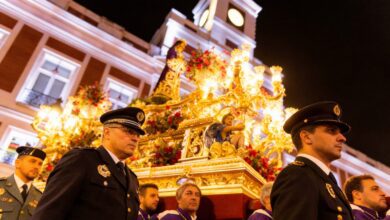
Instead of traditional posters and flyers, the organizers of Semana Santa (Holy Week) are embracing digital formats. As part of this ambitious initiative, more than a dozen iconic sculptures have already been digitized and can now be viewed in virtual reality or on computer screens. The project utilizes Gaussian Splatting technology, which enables the creation of highly accurate holographic models. This approach not only attracts younger audiences but also opens up new avenues for preserving unique works of Baroque art.
The project is supported by city and regional authorities, as well as two local companies specializing in digital development. There are plans to fully virtualize all 33 sculptures featured in the main Easter procession. Some of the digital replicas are already being prepared for display at a special exhibition during Lent.
Technology and tradition
The process is based on non-invasive photography, which captures the smallest details of each piece. Creating a single digital model takes about three hours of shooting and up to thirty hours of post-processing. This approach ensures precision and safety for the original works, which is especially important for objects that lack blueprints or archival documentation.
The capabilities of this new technology have already attracted the interest of other cultural and religious institutions. The Cathedral in Burgos is considering creating a virtual copy of its famous sculpture, while representatives of Easter in Palencia are exploring the potential of such innovations. In the future, digital twins could be used not only for display purposes, but also for restoration or making exact replicas.
Challenges and prospects
Despite the clear advantages, organizers emphasize that virtual copies will not replace the originals in religious processions. However, the very prospect of using digital models in the event of bad weather or for educational purposes is generating significant interest. Last year, the main procession was canceled due to rain, resulting in financial losses for the brotherhoods. Now, insurance covers such losses, but the question about the future of these events remains open.
Alongside digitalization, traditional Easter promotion continues. This year, a renowned artist was invited to create the promotional poster, and a copy of his work was even presented to the Pope during a delegation visit from Valladolid to the Vatican. This blend of classic and innovation highlights the uniqueness of these ongoing changes.
Context and trends
The use of digital technologies to preserve and promote cultural heritage is becoming increasingly common in Spain. In recent years, museums and religious organizations across the country have adopted 3D scanning and virtual tours to make their collections accessible to a wider audience. Such solutions are especially popular in regions with a rich history and traditions, where preserving originals often proves challenging. These projects not only boost tourism but also help draw attention to restoration efforts and the protection of unique works of art.