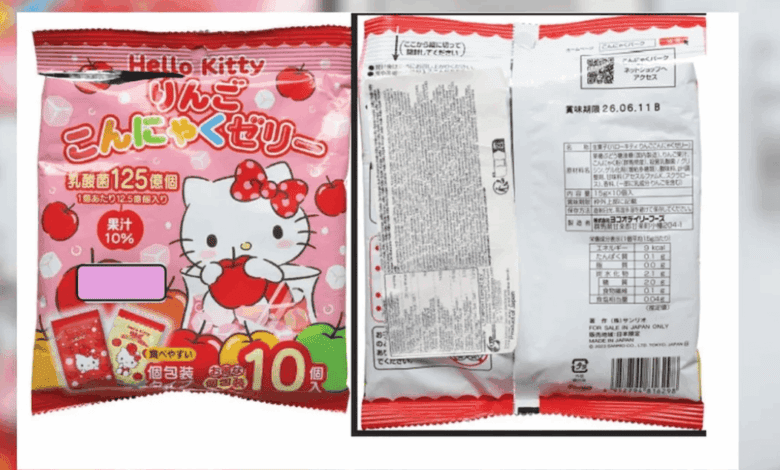
A new case has been reported in Spain where imported products may pose a health risk. This time, it concerns Hello Kitty candies imported from Japan. The Spanish Agency for Food Safety and Nutrition (Aesan) has issued an official warning about the risk of choking associated with consuming these sweets. The significance of this news lies in the fact that the product has already reached store shelves in various regions of the country, meaning that many families could potentially be affected.
The alarm was raised after a report from Dutch health authorities. The case involves apple-flavored jelly candies with konjac, sold under the Sanrio brand. The product is packaged in plastic bags containing individual small packets. Experts note that the specific shape and consistency of these sweets may cause breathing difficulties, especially in children.
Distribution map
According to RUSSPAIN.COM, the dangerous candies have been found in stores across Andalusia, Aragon, Asturias, the Balearic and Canary Islands, Cantabria, Castile and León, Catalonia, Galicia, Madrid, and Valencia. However, it is possible that some of the product has also reached other regions of the country. Authorities have already alerted all autonomous communities through the SCIRI rapid information exchange system to expedite the removal of the product from sale.
Important note: if you already have this candy at home, experts strongly advise against consuming it. All information about the risks and necessary actions has been communicated to local authorities to minimize potential health consequences.
Response and actions
The response mechanism to such threats in Spain operates swiftly. Upon receiving an alert from European partners, Aesan immediately issued a warning to all responsible bodies. Stores and distributors are required to remove the product from shelves without delay. If you find this candy at home, it is recommended to return it to the store or dispose of it safely.
Parents and guardians should exercise particular vigilance, as children are most often the victims of such incidents. Even if the packaging seems harmless, the risk of choking remains due to the product’s composition and texture. Authorities stress: any suspicious sweets are best avoided altogether.
Context and similar cases
In recent years, Spain has repeatedly recorded cases of imported products being withdrawn due to health concerns. For example, in 2024, a similar situation arose with Asian jelly desserts, which also contained konjac and posed a danger to children. The product was quickly pulled from sale following several incidents. Earlier, in 2022, the country discussed an incident involving imported chewy candies that caused allergic reactions among consumers. Such events highlight the importance of quality and safety control over imported goods, especially when it comes to treats for children.