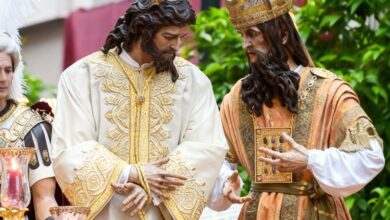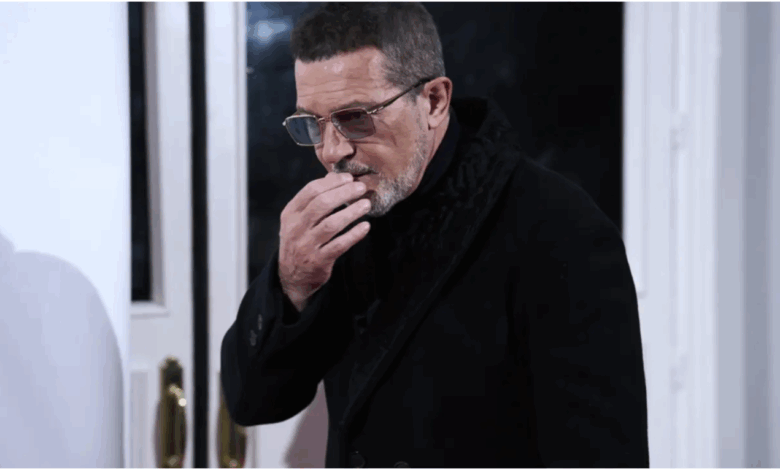
In Spain, Semana Santa has long become not just a religious event, but a cultural phenomenon that brings together people of all ages and backgrounds. For the people of Andalusia, especially Malaga, this week is more than just a succession of processions—it’s part of their personal history and collective memory. When renowned figures such as Antonio Banderas return to their hometown to take part in the celebrations, it symbolizes a deep bond with their roots and respect for the traditions that shape the identity of the entire region.
This year, renewed attention was drawn to Semana Santa in Malaga when Antonio Banderas appeared among the participants of the procession. Despite being tired after a flight from Madrid, the actor did not miss the chance to walk the city’s streets with other members of Cofradías Fusionadas, carrying the image of Virgen María Santísima de Lágrimas y Favores on his shoulders. His presence energized both locals and visitors, emphasizing how important this tradition is for many families.
Family roots
Banderas’s connection to Semana Santa goes back to his childhood. His mother was deeply devoted to Virgen de Lágrimas y Favores, and taking part in the procession has become an integral part of the actor’s family history. These moments, when traditions are passed down from generation to generation, give the holiday its special atmosphere. In Malaga, Semana Santa is seen not only as a religious event but also as a time to gather with friends and neighbors, remember those who have passed, and support one another.
This year, Banderas arrived early at the San Juan church to prepare for the procession. Inside, the atmosphere was special: participants greeted each other with hugs, exchanged brief words, and before stepping outside, they sang a song together in honor of the Virgen María Santísima de Lágrimas y Favores. These details make Semana Santa in Málaga unique and set it apart from festivities in other cities.
The city and tradition
Semana Santa in Málaga is not just about religious processions—it is also a major city event that influences the economy, tourism, and social life. Every year, thousands come to the city to witness the processions, immerse themselves in the atmosphere, and become part of the celebration. For locals, taking part in Semana Santa is a way to express their connection to the city, honor the past, and support the traditions that make Málaga distinctive.
The presence of celebrities like Antonio Banderas draws extra attention to the celebration and helps promote it beyond the region. However, for most participants, Semana Santa remains above all a personal and family event, filled with emotions and memories.
The holiday in detail
Organizing Semana Santa requires considerable effort from local brotherhoods and volunteers. Every stage—from preparing costumes to coordinating procession routes—is planned with care. Special emphasis is placed on preserving authenticity and respecting historical traditions. This year, as always, Málaga’s streets were decorated with flowers, and residents welcomed the participants with approval and support.
According to russpain.com, interest in Semana Santa in Málaga continues to grow, despite changes in society and the emergence of new types of leisure activities. For many city residents, this holiday remains a key part of cultural life, and taking part in it is considered a matter of honor and pride.
In recent years, Semana Santa in Spain has repeatedly sparked discussions about the role of tradition in modern society. In 2024, both Seville and Granada also saw an increase in participants and spectators, indicating renewed interest in cultural heritage. Some regions in the country have introduced new ways of celebrating, blending classic elements with modern technology. However, Málaga maintains a special focus on family and local traditions, setting the city apart from others.