When the lights suddenly go out at home, the first thought that comes to mind is: “What happened this time?” This unpleasant interruption in our daily routine is actually the work of one of our main safety guardians—the residual current circuit breaker. Its primary role is to instantly detect current leaks and shut off the electricity supply to prevent fires or electric shock. But how can you figure out why it tripped and what steps to take to restore power?
Understanding why this device trips is key to fast and safe troubleshooting. In most cases, the issue lies not in a major outage, but in a local problem inside your apartment or house. Before calling emergency services, it’s worth taking a few minutes to perform a simple check—which often helps identify and resolve the source of the malfunction on your own.
Frequent circuit breaker trips should never be ignored—it’s a clear warning of potential danger. Ongoing outages can signal serious problems with your wiring or household appliances, which could eventually lead to severe consequences. That’s why it’s important not just to restore power, but to get to the root of the issue.
Main reasons why the circuit breaker trips
There are several common scenarios that can cause a residual current device (RCD) to cut off electricity. One of the most frequent reasons is a simple overload of the power network. If you turn on the washing machine, oven, kettle, and heater all at once, you may exceed the power limit set by your utility plan, in which case a different device—a power control circuit breaker (ICP)—will trip. In this situation, just unplug a few appliances and switch the breaker back on.
Another likely cause is a malfunction in the protective device itself. If the power goes out when there is no visible load, the breaker may be outdated or faulty. Weather conditions can also impact your electrical system. High humidity or heavy rain can lead to current leakage or a short circuit, especially if you have outdoor outlets or appliances.
Faulty household appliances are often to blame as well. If the breaker trips when a specific device is turned on, that appliance is likely the source of the problem. Damaged heating elements, faulty capacitors, poor-quality extension cords, or simply worn cables can all cause current leakage. Old toasters and switches are common culprits for this kind of issue. Sometimes, even defective power adapters—such as those in certain computers that generate high-frequency interference—can trigger the breaker.
How to identify the source of the problem yourself
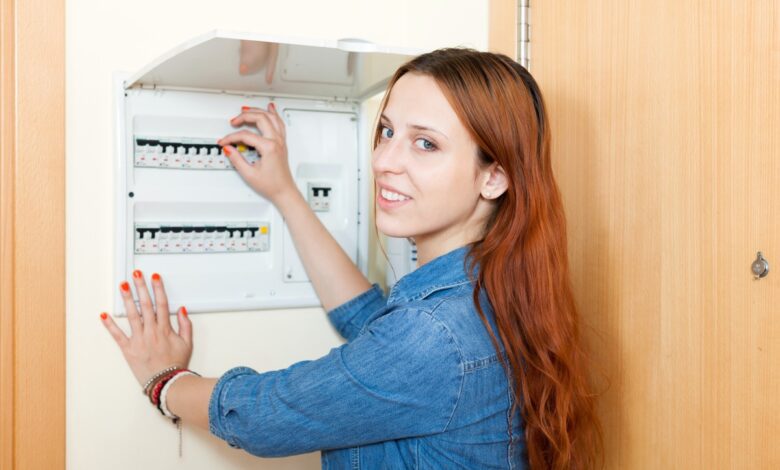
If the circuit breaker trips for no apparent reason, for example, when all appliances are turned off, this may indicate a hidden short circuit caused by damaged wire insulation or a fault in the breaker itself. There is a proven method for accurate diagnosis. First, completely cut off power to the house by switching off all circuit breakers in the panel, and then unplug all electrical devices from their sockets.
After that, turn on the main differential circuit breaker. If it stays on, the breaker itself is fine. Next, start turning on the other, smaller breakers one by one—these control different circuits (lighting, outlets in rooms, kitchen, etc.). When the differential breaker trips again, you’ll know which circuit is causing the issue. Now that you’ve identified the faulty line, unplug all devices connected to it and plug them back in one by one until you find the culprit.
Common scenarios and their solutions
Let’s look at a few typical situations. If the lights go out but none of the breakers in the panel have tripped, the problem could be outside your apartment: a line fault, scheduled maintenance, or even unpaid bills. In this case, you should contact your electricity provider. If the differential breaker won’t stay on and shuts off immediately, this is a clear sign of a serious current leak. Follow the steps outlined above to identify the faulty device or section of the circuit.
Sometimes outages occur sporadically, with no apparent pattern. This is the most challenging situation to diagnose. The cause could be a device that malfunctions only occasionally, a voltage surge in the system, or even issues with your neighbor’s wiring. If your own troubleshooting doesn’t resolve the issue and the problem persists, it’s best not to take risks—contact a professional.
Prevention and safety: when to call an electrician
To minimize the risk of sudden power outages, follow a few basic rules. Inspect your wiring every 5–10 years. Replace old circuit breakers with modern models that are more resistant to voltage fluctuations. Don’t overload a single outlet with high-powered devices, and make sure outlets and appliances stay dry, especially in the bathroom and kitchen.
You should call a professional electrician in the following cases: if the breaker doesn’t turn on after several attempts and all checks; if it keeps tripping for no obvious reason; or if you’re unsure about the state of your wiring, notice strange smells, or see sparks near the electrical panel. It’s also recommended to replace the circuit breaker itself if it’s been in use for more than 10 years.
Reference RUSSPAIN. In Spain, the electricity supply system has a distinctive feature—contracted power (potencia contratada). This is the maximum amount of electricity a consumer can use at one time. It is specified in the contract with the supplier and measured in kilowatts (kW). If the total power of devices in use exceeds this limit, a special power control breaker (ICP), which is part of the smart meter, automatically cuts off the electricity supply. If this breaker trips frequently, it means the selected power capacity is insufficient for your needs. In this case, consider increasing it by contacting your energy provider.