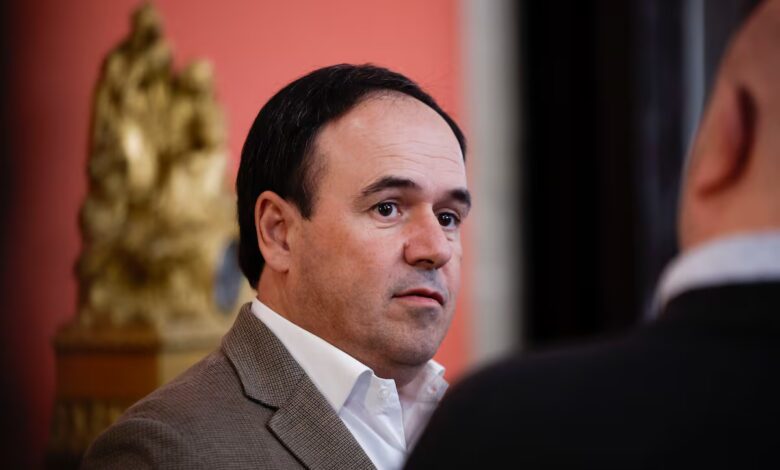
Valencia’s political landscape has taken an unexpected turn. The new president, José Pérez Llorca (Pérez Llorca), delivered a speech in Alicante that immediately drew widespread attention. His communication style stands in sharp contrast to that of his predecessor, Carlos Mazón (Carlos Mazón): calm, aiming for a closer connection with residents, and free of harsh criticism. This shift was noted by everyone following regional politics. Pérez Llorca clearly seeks to ease tensions and restore public trust in government, which has eroded in recent years.
Instead of making grand promises and relying on populist slogans, he is focusing on dialogue. It’s still difficult to gauge how much of this is genuine and how much is a calculated political move. But the change in tone is noticeable even in everyday conversations. Locals observe that the new president is not trying to please everyone, but rather searching for a balance among different segments of society. This is a marked contrast with the previous administration, which often created division.
Problems for the opposition
Amid these changes, Valencia’s socialists have found themselves in a difficult position. After recent elections in Extremadura, it’s become clear: the party is facing challenging times. High voter turnout did not save them from defeat, and their support continues to drop. Many attribute this to voter fatigue and a sense that the socialists aren’t offering anything new.
Pedro Sánchez remains confident in his ability to regain the trust of his supporters. However, analysts point out that previous tactics, such as continuously attacking Vox, are no longer effective. Vox is increasingly seen as a normal part of the political landscape, and attempts to demonize them have lost their impact. Voters are tired of old conflicts and are looking for fresh ideas.
Crisis of ideas
In recent months, the opposition in Valencia has mostly limited itself to demanding Mazón’s resignation and early elections. After Mazón’s departure and Vox’s growing influence, the socialists have been left without a clear agenda. Their public appearances have become infrequent and unconvincing, and they have launched almost no new initiatives.
This is especially evident in the case of Diana Morant, who, despite being part of Sánchez’s government, has failed to become a prominent regional leader. Her public statements lack confidence, and her influence on local politics remains minimal. With voters expecting concrete solutions, the absence of a clear strategy has become a serious issue for the party.
Public expectations
The Valencian public is tired of constant scandals and mutual accusations. People want to see real results, not endless political games. The new president is trying to respond to these demands by offering a calmer and more measured approach. But without a strong opposition, any changes may prove superficial.
Until the Socialists find new meaning and offer voters relevant solutions, their position will continue to weaken. The times demand fresh ideas and new faces capable of inspiring people to change. Otherwise, the region’s political scene risks becoming one-sided, which is in the interest of neither the authorities nor society.