Debate over lowering the legal blood alcohol limit for drivers in Spain from 0.5 to 0.2 grams per liter has stalled. Although most political forces support the measure, the bill remains stuck in the lower house of parliament. The main obstacle is complex negotiations between parties and demands to transfer authority over driving license examinations to Cataluña.
In March, lawmakers began discussing a bill that would standardize blood alcohol limits for all drivers, including beginners and professionals. However, after a vote in which only the Vox party opposed and the Partido Popular abstained, the document failed to make it out of committee. The biggest sticking point has been the demands of Esquerra Republicana, a party insisting on transferring control over driving tests in Cataluña.
Political disagreements
Interior Minister Fernando Grande-Marlaska publicly urged lawmakers to speed up the passage of the bill, stressing that further delays are unacceptable. According to him, the reform must be implemented as soon as possible, as it concerns people’s lives on the roads.
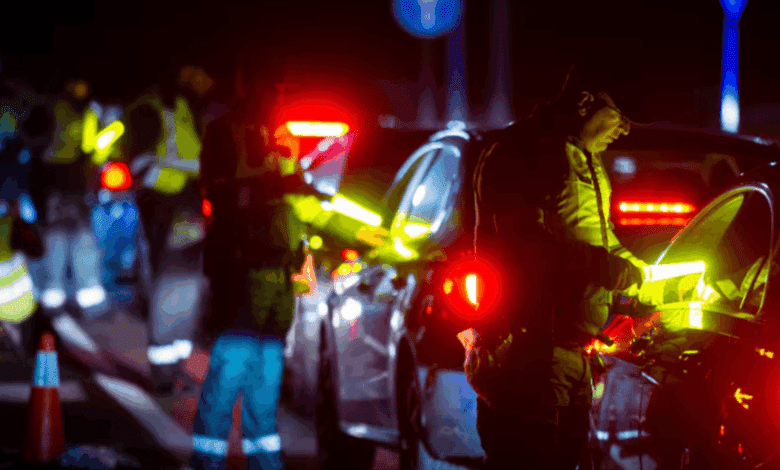
The Socialists have proposed not only lowering the permissible blood alcohol level, but also banning the dissemination of information about police road checks for alcohol and drugs. They referenced countries known for their strict road safety policies—Sverige, Norge, Polska, and Eesti—as models, where similar or even stricter limits are enforced.
In some Eastern European countries such as România, Česká republika, Magyarország and Slovensko, there is a zero tolerance threshold for all drivers. The European Transport Safety Council recommends a limit of 0.2 grams per liter, which is essentially equivalent to zero tolerance.
Statistics and consequences
The head of the main traffic agency, Pere Navarro, reminded that tightening the limit is a moral obligation to accident victims. A study by the Universitat de València found that alcohol remains one of the most dangerous factors on Spain’s roads.
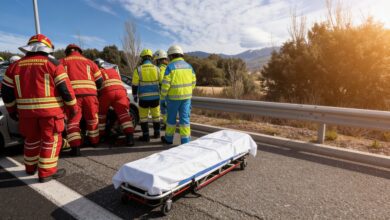
From 2018 to 2022, the number of alcohol-related accidents with injuries increased by 20%. The presence of alcohol not only leads to 16% more victims but also raises the fatality rate by five percentage points. Furthermore, the severity of the consequences in such incidents is also higher.
In 2024, almost half of drivers who died in traffic accidents and were posthumously examined had alcohol, drugs or other illegal substances in their system. If the new rules take effect, even a single glass of wine or beer could push most men and women weighing between 70 and 90 kilograms above the legal alcohol limit.
Catalonia’s requirements
The issue of transferring authority over driving exams has become the main sticking point. Esquerra Republicana is leveraging its influence in parliament to gain control over this process for Catalonia. According to party representatives, this would help reduce exam wait times, which have become a national problem.
The party believes that if exams were conducted at the regional level, the process would be faster and more efficient. As a temporary measure, Esquerra proposes at least a partial transfer of authority, so that the Catalan police force (Mossos d’Esquadra) can be involved in administering exams.
Within the party, members note they are ready to support lowering the alcohol limit only after the examiner issue is resolved. They are convinced that the socialists from Madrid are deliberately delaying the process, despite the fact that regional authorities and even the Catalan police have no objections to transferring authority.
Problems with driving exams
Pere Navarro, director of the Directorate-General for Traffic, admits the current staff of examiners cannot keep up with demand. Although the staff is almost fully staffed, its size does not match the country’s current population. When the 900-person limit was set, Spain’s population was 40 million, but now it is approaching 50 million.
The agency is negotiating with the Ministry of Civil Service to expand its staff in order to meet current demands. However, no solution has been found yet, and the waiting lists for exams continue to grow.
While the Socialists continue consultations with other parties, the fate of the law remains uncertain. Parliament admits the process has stalled, and it is unclear when the disagreements will be resolved.