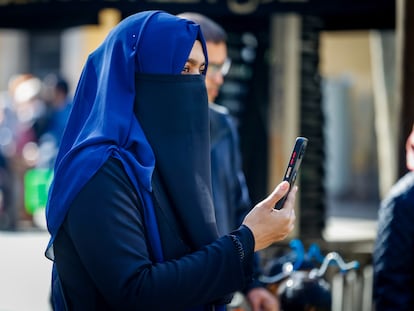
The issue of banning the burqa and niqab has once again come to the forefront of Spanish society. This topic has become more than just a subject of debate; it has turned into a real battleground for political parties, each eager to demonstrate their resolve and toughness. Such decisions could affect not only Muslim families but also the entire education system, as well as perceptions of freedom and women’s rights in the country.
In recent months, Spain’s political forces have been competing to propose the strictest measures regarding the wearing of Islamic veils. An initiative that began with a right-wing party was quickly picked up by others. Now, the debate is no longer about whether to regulate or ban these garments—it’s about who will be the first and most decisive in opposing them. This race for leadership on the burqa issue has become a distinct feature of the current political agenda.
The Catalan experience
Over the past 15 years, Catalonia has become the stage for the most heated and emotional debates about the burqa and niqab. Although the number of women using these garments is extremely small, it was here that the first attempts at prohibition were made. In 2010, the municipality of Lleida, led by the Socialists, introduced restrictions on wearing the burqa in public buildings. Other cities in the region—regardless of their political leadership—soon followed suit.
However, attempts to introduce such bans at the local level were halted by a Supreme Court ruling in 2013. The court reminded that matters related to religious clothing do not fall under municipal jurisdiction. Nonetheless, the issue did not disappear from the political agenda; instead, it changed its shape—becoming part of election campaigns and parliamentary debates.
The political relay
In May of this year, one of Catalonia’s leading parties raised the issue of banning the burqa again in response to growing pressure from rivals. This time, the discussion focused not only on bans in public spaces, but also on an outright prohibition of any Islamic coverings in schools. The proposal quickly sparked disputes between parties, each vying to claim leadership in the fight against religious symbolism.
Soon after, another right-wing party rushed to remind everyone that it was the first to put forward such an initiative. As a result, the political discussion took on a competitive tone, where demonstrating determination and tough stances mattered more than the substance of the issue. Some parties even linked the debate about the burqa to immigration, arguing that such measures are necessary to control migration processes.
Consequences for society
The escalation of debates over the burqa and niqab reflects broader trends in Spanish politics. Despite the fact that cases of wearing these garments are rare, the discussion has become a symbol of the struggle for identity and the control of public spaces. For many women at the center of this conflict, the situation is even more complicated: they face pressure not only from within their communities but also from the state.
The introduction of new restrictions could affect the atmosphere in schools and municipal institutions, as well as increase tensions between different population groups. At the same time, such initiatives are often used as a tool to mobilize voters and strengthen party positions ahead of elections.
In recent years, Spain has already faced similar debates over religious symbols and clothing. In some regions, attempts were made to restrict the wearing of the hijab or other elements of Islamic culture, but most of these measures sparked heated debates and proved to be short-lived. Such discussions regularly flare up before elections as parties seek to draw attention to issues of identity and security. In other European countries, similar initiatives have also become the subject of heated disputes and court battles, highlighting the complexity and many facets of this issue.