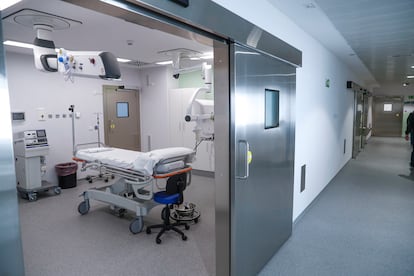
A heated debate is unfolding in Seville over one of the region’s most modern medical facilities. The Muñoz Cariñanos Hospital, which has seen four symbolic openings, is still not admitting patients. Most of its wards remain closed, and instead of the bustle of medical activity, a quiet stillness lingers, attracting filmmakers. This situation puzzles Andalusia’s residents, who have long faced a shortage of hospital beds and overcrowded clinics.
Paradoxically, the hospital—equipped with state-of-the-art technology—has drawn not doctors, but film crews. Its spacious corridors and empty patient rooms have become an ideal location for movies and TV series. In 2023, scenes from ‘El Cielo de los Animales’ were filmed here, followed a few months later by the production of ‘Lucidez.’ The reason is simple: the absence of patients and staff allows uninterrupted work, something impossible in operating hospitals.
Scandal over empty hospital halls
Healthcare workers and unions have spoken out openly about their dissatisfaction. According to them, leaving the hospital idle amid constant overcrowding in other regional facilities is a luxury the healthcare system cannot afford. Union representatives stress that the modern equipment and spacious wards could significantly ease the pressure of long queues and lack of beds—if the hospital were fully operational.
However, the reality is that most of the hospital staff actually belongs to another medical center — Virgen del Rocío. Due to the lack of its own team and a clear development strategy, all intensive care units were closed, and some of the equipment was transferred to other hospitals. Despite numerous ceremonial openings, the hospital has never become a fully functioning medical institution.
Film Studio Instead of a Hospital
Using the hospital as a film set became possible thanks to special conditions provided by the regional healthcare system. To receive a filming permit, you only need to fill out a special request and present insurance. No financial compensation is required for the use of the premises — authorities believe this way they support the development of culture.
Producers note that empty hospital corridors and the absence of patients create ideal working conditions. In other clinics, filming is often impossible due to noise, movement, and limited space. However, not all projects are brought to life: sometimes plans fall through because of sudden repairs or because patients need to be urgently accommodated in previously vacant units.
History Repeats Itself
The situation with the Muñoz Cariñanos Hospital is not new for Seville. Back in the early 2000s, when the film ‘Solas’ was shot here, the building was already vacant, while other hospitals in the city were overcrowded. Then, as now, the question arose: why is a modern medical facility not being used as intended when the region is experiencing a severe shortage of resources?
In recent years, similar debates have arisen in other regions of Spain. In Madrid and Barcelona, there have been repeated discussions about cases where new or renovated hospitals remained underutilized for extended periods due to bureaucratic delays or staffing shortages. At the same time, filmmakers are increasingly choosing such venues for shoots, taking advantage of their availability and unique atmosphere.
While the Andalusian authorities have yet to offer concrete solutions, the hospital in Seville remains a symbol of inefficient use of public resources. For some, it is a space for creativity; for others, a reminder of unresolved healthcare issues.
In recent years, cases have increased in Spain where modern medical facilities are not used for their intended purpose. In Valencia and Zaragoza, new hospitals have also served as temporary film sets or exhibition halls due to delays in staffing. Such situations spark public debate and become topics of discussion at the regional parliamentary level. The issue of efficient use of public investment in healthcare remains unresolved, and examples from different cities only highlight the scale of the problem.