Spain is once again debating the figure of Juan Carlos I and his complicated relationship with the country’s history. Recent revelations from former Prime Minister José Luis Rodríguez Zapatero have shed light on how the ex-king perceived the Law of Historical Memory, enacted in 2007. This law marked a turning point for Spanish society, as it officially condemned the Franco regime and began the process of restoring justice for the victims of the Civil War and the dictatorship.
According to Zapatero, Juan Carlos I did not hide his inner tension when the new initiative was discussed. The reason was simple: Franco himself had once chosen him as his successor, a fact that left a mark on both his life and reign. In private conversations with the then-prime minister, the monarch repeatedly made it clear that he felt uneasy because his past was now being viewed in a different light.
In his recently published memoirs, Juan Carlos I pays particular attention to his relationship with the dictator. He describes Franco as someone who saw him as Spain’s future and treated him with a certain sympathy. These recollections sparked a mixed reaction within the royal family, especially among those eager to distance themselves from the authoritarian legacy.
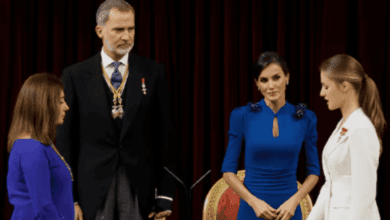
Zapatero, in turn, believes that the current monarch, Felipe VI, is gradually changing the perception of the royal institution in the country. In his view, generational succession will lead Spanish society to see the royal family differently, and the heir Leonor will continue this path of renewal.