A conflict has reignited in Madrid over working conditions for medical staff employed at public institutions managed by the private company Quirónsalud. For local residents, this is not just a dispute over wages—it’s about the future of the healthcare system, transparency in public contracts, and equal rights for workers. The issue affects thousands of families and could impact the quality of medical care patients receive.
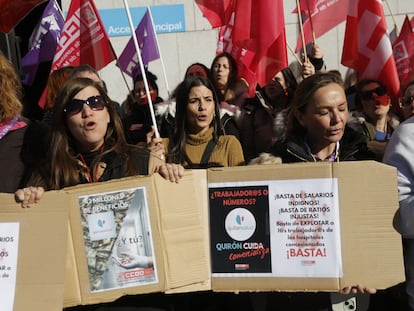
On Wednesday, dozens of Quirónsalud employees took to the streets outside Infanta Elena Hospital in Valdemoro, braving heavy snowfall and blocked roads. People stood in the pouring rain, holding placards with sharp slogans, accusing the management of exploitation and unfair working conditions. The banner that became the symbol of the protest read: “El grupo Quirón nos deja sin riñón” (“The Quirón group leaves us without a kidney”).
Reasons for the protest
The protest was organized by the major union Comisiones Obreras (CC OO) as part of a broad campaign launched back in November. Workers from three publicly owned hospitals under Quirónsalud management—Infanta Elena, Villalba, and Rey Juan Carlos—emphasize that their work is paid according to a less favorable collective agreement used in the private sector. Meanwhile, employees of fully public clinics receive higher salaries and better social benefits.
Special attention is given to the situation at Fundación Jiménez Díaz — this institution is owned by Quirónsalud but provides services under a public contract. Officially, working conditions here should match those in public hospitals; however, according to the union, workers’ rights are often violated in practice. Despite calls for solidarity, other unions did not support the protest, adding tension within the staff.
Political context
The issue of cooperation between the state and private companies in healthcare has long been the subject of fierce political debate in Madrid. The opposition accuses the regional government and President Isabel Díaz Ayuso personally of signing opaque and overly business-friendly agreements. According to union estimates, Quirónsalud receives around one billion euros from the region each year, while staff complain about low wages and excessive workloads.
The scandal has been fueled by recent investigations: in the spotlight is the regional leader’s partner, who worked as a consultant at Quirónsalud and is suspected of tax evasion and possibly bribing one of the company’s top managers. These developments have deepened distrust toward the public-private partnership model and sparked a wave of criticism against the authorities.
Response and consequences
Despite challenging weather conditions, Infanta Elena staff have not dropped their demands. According to union representative Samuel Mosquera, following this action a new demonstration is planned at Fundación Jiménez Díaz, to be followed by a series of strikes. Infanta Elena Hospital employs almost a thousand people, and each one feels the impact of the differences in working conditions between the private and public sectors.
Debate on social media continues: some support the protesters, while others point to risks for patients and potential hospital disruptions. Questions arise about the fairness of budget allocation and who truly benefits from such agreements. The situation escalated last December after the release of an audio recording in which the manager of another private company running Torrejón hospital urged staff to put business interests ahead of patient care.
Future in doubt
The Quirónsalud case has become a litmus test for Madrid’s entire healthcare system. Protests, investigations, and political battles over contracts with private companies highlight the urgent issue of transparency and social responsibility. For many local residents, this is more than a dispute between employer and employees—it’s a signal that management of medical institutions needs real change.
While authorities and business representatives avoid direct comments, hospital staff continue to fight for their rights, and society closely follows developments. The next wave of protests could be decisive for the future of the healthcare system in Madrid.