In China, scientists have once again turned their attention to the mysterious remains discovered at the Xujayao site in Hebei province. These bones and teeth, found back in the 1970s, have long sparked debate among experts. Now, an international team of researchers has presented new data that more precisely determines when these ancient humans lived. It turns out the fossils date back between 207,000 and 128,000 years ago. This wide range of dates has prompted a reassessment of previous theories about hominin evolution in East Asia.
The discoveries from Xujayao first became known in 1974, when archaeologists began excavations in Yangyuan County. Over several years, they gathered an impressive collection of artifacts, from stone tools to animal bones, as well as 21 fragments of human remains. These bones belonged to at least 11 different individuals, among whom stood out an adult with an unusually large brain — its volume reached 1,700 cubic centimeters. Later, some researchers suggested classifying these people as a separate species, named Homo juluensis.
Research methods
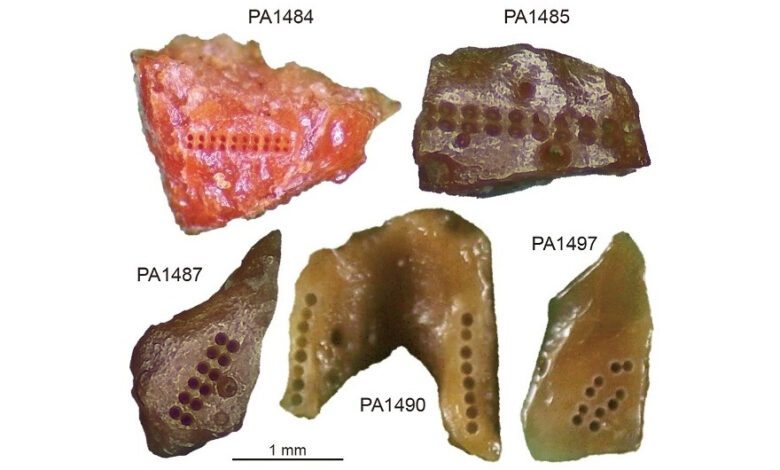
To determine the age of the remains, experts used modern analytical methods. Five fragments of human bones were selected and subjected to uranium-thorium dating. In addition, eight horse teeth found in the same layers were examined using electron paramagnetic resonance and combined uranium-series analysis. Six of these teeth came from the layer where the human bones were discovered, while two were found in deeper, older deposits.
The results were highly informative. The youngest of the analyzed bones dates back to around 99,000 years ago, while the oldest is about 201,000 years old. Similar ages were obtained for the horse teeth: samples from the upper layer ranged from 144,000 to 199,000 years, while those from the lower layer ranged from 180,000 to 211,000 years. To improve accuracy, the researchers used Bayesian modeling, incorporating data from optically stimulated luminescence and the analysis of cosmogenic aluminum-26 and beryllium-10 isotopes.
A new perspective on ancient humans
Updated dating has determined that the Xujiayao people inhabited what is now China between 207,000 and 128,000 years ago. This discovery is important not only for understanding hominin evolution in Asia, but also for reconstructing ancient population migrations. Interestingly, some researchers include not only the Xujiayao remains, but also skulls from Xuchang, as well as Denisovans from Denisova Cave, Baishiya Karst Cave (Xiahe) in Tibet, the Tam Ngu Hao 2 site in Laos, and even an ancient jawbone found at the bottom of the Taiwan Strait, in the proposed species Homo juluensis.
However, not all finds have been grouped under this taxon. For example, the so-called dragon man (Homo longi), which was recently attributed to the Denisovans based on genetic and proteomic research, remains outside this group. This highlights just how complex and tangled the picture of human evolution in East Asia remains.
Archaeological discoveries in China
Chinese lands continue to astound archaeologists. In addition to Xujiayao, many other remains of archaic humans have been found across the country. For example, at the Yunxian site in Hubei Province, three skulls dated to between 0.94 and 1.1 million years old have been discovered. The latest was found only recently, in 2021, further confirming the richness and significance of China’s archaeological sites for global science.
Each new discovery adds detail to the portrait of Eurasia’s ancient inhabitants. Modern analytical methods not only help refine the dating of remains, but also provide insights into migrations, lifestyles, and even possible interactions between different hominin groups. Chinese researchers, in collaboration with colleagues from Australia, the United States, and France, continue to uncover new chapters in the history of humanity.
In case you didn’t know, Homo juluensis is a provisional name suggested for a group of archaic humans whose remains have been found in China and certain other regions of Asia. This taxon has not yet been officially recognized by all scholars, but is currently under discussion within the scientific community. In recent years, Chinese archaeologists have been actively working with international experts, taking advantage of the latest analytical methods to achieve more precise results. Thanks to these efforts, China is emerging as one of the world’s key centers for paleoanthropological research.