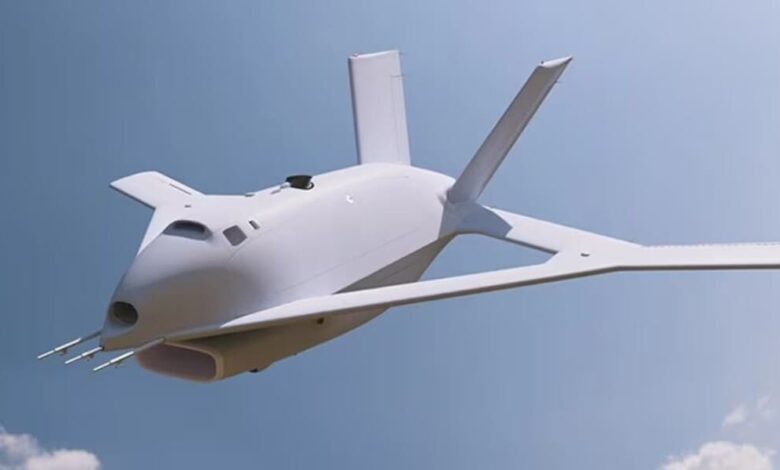
As part of the CRANE (Control of Revolutionary Aircraft with Novel Effectors) program, DARPA and Aurora Flight Sciences, a Boeing subsidiary, are developing the experimental X-65 aircraft. Its main feature is the elimination of traditional moving control surfaces like flaps, ailerons, and rudders. Instead, engineers are implementing a system of brief air pulses that create localized changes in airflow around the wing. This approach allows pilots to alter flight trajectories without mechanical parts, opening up new possibilities for future aircraft design.
Such an architecture was expected to reduce structural weight, improve aerodynamic efficiency, and simplify maintenance. Additionally, eliminating complicated mechanical control systems should make the drone more energy-efficient and reliable in operation.
Delays and setbacks: how funding problems pushed back the timeline
At the end of 2023, the X-65 project successfully passed the concept review and moved to building a full-scale prototype. Aurora Flight Sciences was awarded the contract to produce the demonstrator, and assembly began at facilities in West Virginia and Mississippi. According to the original plan, flight tests were to begin in summer 2024, with the rollout and first ground tests set for early in the year.
However, during implementation, it became clear that production costs significantly exceeded the initial estimates. The agency decided to temporarily halt work and conduct a budget review. During this period, the project was reorganized: Aurora Flight Sciences became not only a contractor but also a co-investor, which allowed the development to continue despite financial difficulties.
New Deadlines and Prospects: When to Expect the First Flight of the X-65
In August 2025, the parties reached an updated cooperation model. According to recent statements, assembly of the X-65 fuselage is on schedule and will be completed by January 2026. Afterward, ground tests will begin, planned for late 2026 to early 2027. The first flight of the experimental drone is now expected no earlier than late 2027, marking a two-year delay compared to the initial schedule.
Despite the delay, the developers remain confident that the X-65 project can transform the approach to building aircraft. If tests confirm the effectiveness of the new control system, the aviation industry will gain a tool for creating lighter, more economical, and agile airplanes without traditional mechanical components.
Thus, despite temporary setbacks, the CRANE program continues to move forward, and the unique X-65 remains one of the most ambitious projects in unmanned aviation in recent years.