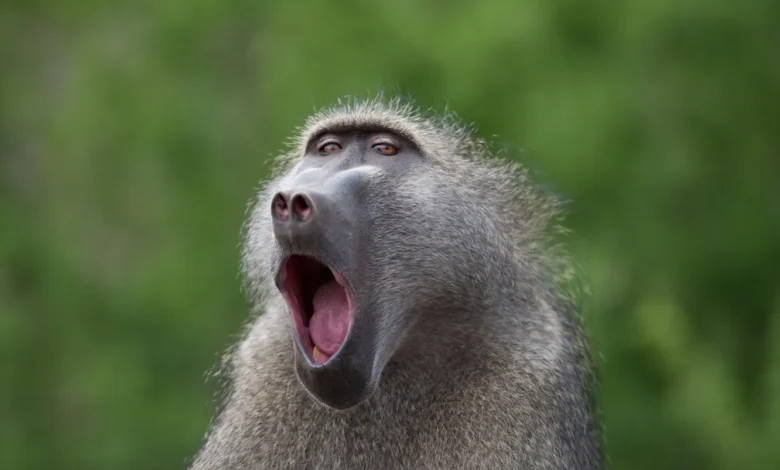
In the world of baboons (Papio), being a leader brings not just privileges, but also unexpected challenges. Alpha males, who secure the safest sleeping spots, pay for this protection with chronic sleep deprivation. Recent studies show that the leader sleeps over two hours less than other group members. This discovery upends traditional views of primate life and their social hierarchies.
Scientists used modern technology—GPS trackers and accelerometers—to track each animal’s movements at night. These devices allowed them to pinpoint exactly when baboons were asleep or awake. It turned out that the center of the group, where the alpha male sleeps, is always a hub of activity: some are tossing and turning, some are scratching, others are shifting positions. Any movement instantly spreads through the group, and the leader reacts to every single one.
As a result, alpha males can hardly ever fall into a deep sleep. Their rest is constantly disturbed, preventing their bodies from fully recovering. Despite the center being considered the safest spot, sleep there is the most restless. It’s a paradox: to protect the group from predators, leaders are forced to sacrifice their own well-being.
Technology and observations
Data on the sleep patterns of baboons was collected using miniature sensors that tracked even their slightest movements. Researchers observed that even a small stir from one group member could wake several nearby neighbors at once. In the center of the cluster, where the alpha male sleeps, the density of animals is highest, which greatly increases the likelihood of being awakened.
Behavioral modeling revealed that if one baboon wakes up, it sets off a chain reaction. The leader, at the center of the activity, is forced to respond to every movement. His sleep becomes fragmented, and deep rest periods are minimized. This leads to accumulated fatigue and a decline in cognitive performance.
The Social Cost of Status
High status in a baboon group brings not just access to better food and the attention of females, but also constant vigilance. The alpha male must always be ready for threats from both outside and within the troop. His position requires him to monitor the situation even at night, which affects his sleep quality.
Interestingly, other group members sleeping on the edges can enjoy a more peaceful and prolonged rest. They are less affected by the movements of their neighbors and wake up without reason much less often. Thus, social hierarchy directly impacts the physical condition of the animals.
Unexpected consequences
Chronic sleep deprivation in alpha males can have long-term health consequences. Fatigue lowers immunity, impairs decision-making, and makes it harder to respond to danger. In the wild, this can cost a leader not only his status, but also his life.
Sleep studies in baboons are shedding new light on the evolution of primate social structures. It turns out that even the strongest and most influential group members are forced to make sacrifices for the common good. Their sleepless nights are the price they pay for the safety of the entire troop.
In case you didn’t know, baboons (Papio) are a genus of primates in the Cercopithecidae family, native to Africa and the Arabian Peninsula. They are known for their complex social structure and pronounced hierarchy. Alpha males play a key role in protecting the group from predators and organizing troop life. Their behavior and lifestyle have long attracted the attention of scientists around the world.