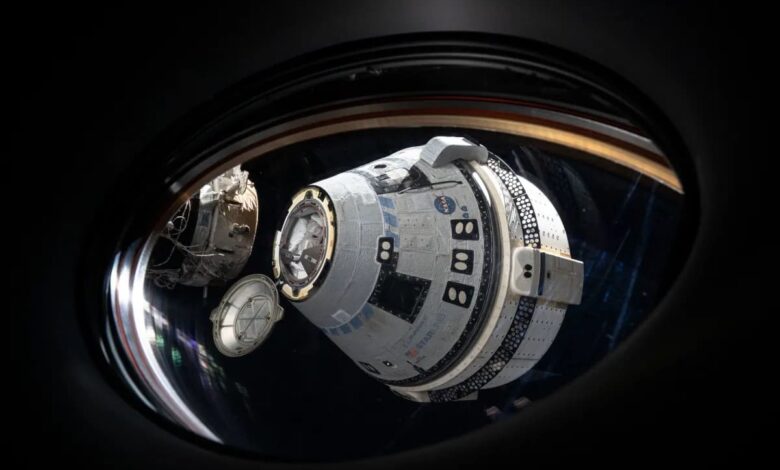
NASA has officially postponed the next Starliner-1 mission to April 2026. This time, Boeing’s spacecraft will travel to the International Space Station (ISS) without a crew on board. The decision comes as additional testing and certification are needed to ensure the safety of future flights.
Under the updated agreement between NASA and Boeing, originally planned for six crewed flights, the program now includes one cargo mission and up to three additional launches before the station is retired. This shift will allow efforts to focus on refining the spacecraft’s critical components and preparing it for full operational use.
Testing and challenges: the road to certification
In recent years, Starliner has repeatedly faced technical setbacks. The first uncrewed flight in 2019 ended in failure due to software errors, cutting the mission short. The spacecraft failed to dock with the ISS, and its return to Earth involved the risk of losing the vehicle.
The second attempt, in 2022, was more successful: Starliner reached the station, but new engine issues emerged. Afterwards, NASA launched an extended cycle of ground tests to identify and resolve any remaining flaws.
Crewed missions and schedule adjustments
In 2024, the first crewed flight was scheduled, with astronauts Butch Wilmore and Sunita Williams on board. However, once again, serious engine issues emerged during docking with the ISS. Despite a successful docking, NASA decided to return the spacecraft to Earth without the crew to avoid risking the astronauts’ lives.
As a result, in 2024, a SpaceX Dragon spacecraft was sent to the station carrying two astronauts instead of four. This allowed Wilmore and Williams to safely return to Earth in March 2025. Afterward, it became clear that Starliner would require another uncrewed launch to confirm the reliability of its systems.
Comparison with Competitors and the Future of Missions
NASA awarded contracts to develop crewed spacecraft to two companies—SpaceX and Boeing—back in 2014. SpaceX successfully carried out a crewed test flight with Crew Dragon in 2020 and began regular missions. The most recent Crew-11 launch took place in August, with the next, Crew-12, scheduled for February 2026.
While Crew Dragon continues to operate reliably, Starliner is still overcoming technical hurdles. The new cargo mission scheduled for 2026 will be crucial for the future of the program. If Boeing meets all requirements successfully, the company will be able to begin full-scale crewed missions and provide crew rotation to the ISS through 2030.
Reminder: What We Know About Boeing and the Starliner Program
If you didn’t know, Boeing is one of the world’s largest aerospace manufacturers, founded in 1916 in Seattle. The company has played an active role in advancing the crewed space programs of the United States, and the Starliner project has become a key element of its commercial partnership with NASA. The spacecraft was designed to deliver astronauts and cargo to the ISS, while also ensuring US independence from Russian crewed vehicles.
Starliner is designed to carry up to seven people or an equivalent amount of cargo. Its construction utilizes modern materials, life support systems, and automated docking technology. Despite a series of setbacks, Boeing continues to upgrade the spacecraft to meet NASA’s strict safety and reliability standards.
In recent years, the company has faced serious challenges: delays, technical failures, and the need to revise contract obligations. Nevertheless, Boeing remains one of the key players in the American space industry and is determined to see the Starliner project through to completion. The success of the upcoming mission will mark an important milestone for the entire US commercial crew program.